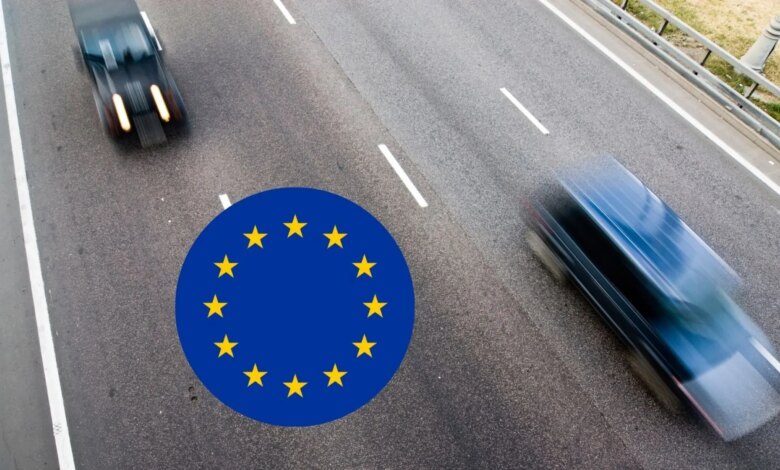
A sharp increase in the speed limit on a key section of a Czech motorway has already changed the game for all of Europe. For the first time in decades, the country has officially allowed speeds of up to 150 km/h on a 50-kilometer stretch, instantly sparking a wave of discussion among experts, politicians, and everyday drivers. This move not only challenges established safety standards but also calls into question the priorities of the European Union’s environmental policies.
While most European countries are tightening restrictions to reduce emissions and prevent accidents, Czechia (Česká republika) has chosen a different path. Authorities insist it’s not an act of rebellion against Brussels but a carefully considered experiment meant to demonstrate whether high speeds can be combined with modern road safety and infrastructure efficiency.
Technology and Infrastructure
The selected stretch of the highway has been modernized with the latest technology. Curve radii have been expanded, innovative drainage systems installed, and excellent visibility ensured even in challenging weather. Special attention has been given to digital panels that automatically adjust the speed limit depending on traffic, precipitation, or fog. If conditions worsen, the permitted speed is instantly reduced to standard levels.
Czech engineers assure that the highway can withstand such loads, and drivers are ready to follow the new rules. To be allowed on this section, vehicles must pass strict technical inspections, which encourages fleet renewal and the adoption of modern driver-assistance systems. Authorities emphasize: safety is not an empty word, but a real priority.
Economy and controversy
Supporters of the new regulation argue that higher speeds will save time on long trips, reduce driver fatigue, and improve the economic efficiency of freight transport. However, opponents keep reminding: at 150 km/h fuel consumption and CO2 emissions rise sharply, and crashes become far more tragic.
Environmental groups and safety experts have already accused the Czech government of ignoring European trends. They insist that experiments like these could lead to an increase in severe accidents and undermine efforts to combat climate change. Nevertheless, Czech officials remain confident: they believe their approach is balanced and the infrastructure is ready for new challenges.
European response
Prague’s decision has caused quite a stir among its neighbors. Poland and Austria are closely monitoring the trial’s results, since they also have modern highways capable of handling high speeds. If the Czech experience proves successful, other countries may well reconsider their own limits.
At the same time, Brussels is already debating the potential consequences for the EU’s unified transport policy. The question of what is more important—freedom of movement or safety and environmental concerns—has once again taken center stage in the European agenda. The discussion promises to be lengthy and contentious, as the stakes are simply too high.
Safety and Control
To minimize risks on the highway, the most advanced monitoring systems have been implemented: from dynamic signs to reinforced barriers and improved road surfaces. Drivers are required to adhere not only to speed limits but also to technical requirements for their vehicles. Violations are recorded automatically, and fines for speeding are particularly steep.
Traffic accident experts remind us: at such speeds, a collision can be fatal even for the most modern vehicles. However, Czech authorities are betting on driver discipline and road quality, believing these factors can reduce accident rates even at high speeds.
The experiment on the Czech highway has already sparked heated debate in European media and on social networks. Some see it as a step forward toward freedom and technological progress, while others view it as a threat to life and the environment. Whatever the outcome, one thing is clear: Czechia is once again in the European spotlight, and its roads are under the watchful eye of the continent.
The Czech Republic (Česká republika) is a country in Central Europe known for its pragmatic approach to reforms and innovations in the transport sector. In recent years, the country has invested heavily in modernizing its road infrastructure, implementing digital technologies, and tightening road safety regulations. Czech highways are considered among the most advanced in the region, and experiments with raising speed limits are drawing attention not only from neighboring countries but also from the entire European automotive industry.