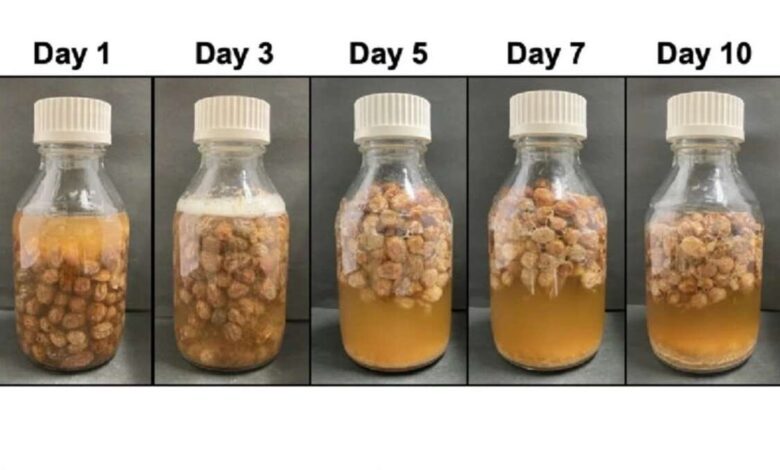
A team of researchers conducted a series of laboratory experiments to discover how, in ancient times, people managed to produce alcoholic beverages from raisins without the use of modern yeast cultures. The scientists recreated the conditions in which ancient winemakers from Carthage and Rome crafted the famous raisin wine known as passum. The experiment not only reproduced the ancient technique but also revealed why this method was so effective.
In modern wine production, specially cultivated strains of Saccharomyces cerevisiae yeast are typically used to kick-start fermentation. In ancient times, however, winemakers lacked access to pure cultures, and the necessary microorganisms are rarely found on the surface of fresh grapes. Instead, the berries are mostly covered with molds and bacteria that can ruin the product, turning it into vinegar.
To determine how these problems were avoided, the researchers dried grapes in two ways: under sterile laboratory conditions and outdoors in the sunlight. They then compared the microbiological makeup of fresh grapes and raisins using genetic analysis methods. It turned out that sun-drying dramatically changes the surface microflora of the fruit.
Sun-drying as a natural filter
The experiment revealed that ultraviolet radiation and moisture loss during drying destroy most pathogenic microorganisms, including mold and harmful bacteria. As the berries begin to dry, wild yeasts from the surrounding environment settle on their surface. These are carried by the wind and insects, particularly wasps, which are especially active in vineyards during the ripening season.
When raisins were soaked in sterile water, fermentation began within a few days without any additional additives. The resulting drink contained up to 12 percent ethanol, comparable to modern wines. In contrast, raisins dried in a sterile incubator did not ferment at all—no viable microorganisms remained on them.
Genetic analysis confirmed that fresh grapes are dominated by species that cannot ferment intensively. Sun drying, on the other hand, encourages the presence of resilient yeast strains that kick-start the process of turning sugar into alcohol. Thus, ancient winemakers, without knowing it, used an effective biotechnology to select the necessary microorganisms.
Ancient Biotechnology and Modern Discoveries
The experiment showed that drying grapes is not just a way to extend the shelf life of berries, but a deliberate method of preparing raw material for winemaking. This process helps create a unique microbiome on the surface of the raisins, dominated by wild yeast capable of active fermentation. This explains why raisin wine turned out strong and resistant to spoilage, even without modern technology.
Comparing the two drying methods confirmed the hypothesis: only grapes dried in the open air became suitable for making alcoholic beverages. In laboratory conditions, where there is no contact with the external environment, the necessary yeast does not appear and the fermentation process does not start.
This discovery not only sheds light on ancient winemaking methods but could also benefit today’s producers striving to create natural, authentic beverages without artificial additives.
Historical context: passum and its role in culture
Raisin wine, or passum, was widely popular in the ancient world. It was valued for its rich flavor, high alcohol content, and long shelf life. This drink was often served at banquets and used in religious ceremonies. In Carthage and Ancient Rome, passum was considered a delicacy available not only to the elite but also to ordinary citizens.
The technique of making passum was passed down from generation to generation, with the secrets of drying and fermentation carefully guarded. Despite lacking modern microbiological knowledge, ancient winemakers intuitively developed an effective way to produce quality wine. Contemporary research only confirms the brilliance of their approach.
Today, interest in traditional winemaking methods is on the rise again. Many producers are experimenting with natural yeasts and minimal processing, seeking to recapture the taste and aroma familiar to the ancient Romans.
A note about Scientific Reports magazine
The journal Scientific Reports, where the results of this study were published, is one of the most renowned open-access scientific publications. Founded in 2011, it is part of the Nature Publishing Group portfolio and publishes peer-reviewed articles across a wide range of scientific fields. The journal quickly gained popularity thanks to its transparent publishing process and high citation rates. It regularly features research in biology, chemistry, physics, medicine, and other disciplines. For many scientists, publication in Scientific Reports is considered prestigious and contributes to international recognition of their achievements. The journal actively promotes open knowledge sharing and supports the development of interdisciplinary research.