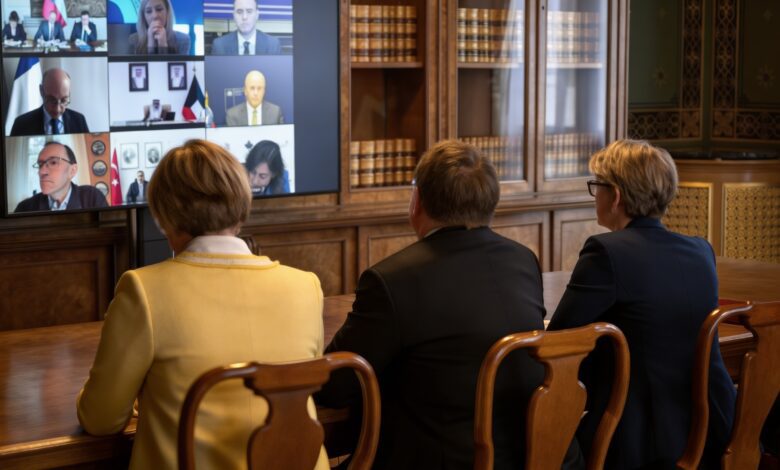
Spain’s absence from the meeting of 35 leading democracies on security in the Strait of Hormuz sent a notable signal to the entire country. This decision directly affects Madrid’s economic interests, as stable oil and gas supplies through Hormuz are crucial for Europe. Spanish companies and consumers may face higher energy prices, as well as new challenges in foreign policy.
Reasons for exclusion
Spain did not receive an invitation to the London meeting because it did not support the collective condemnation of Iran’s attacks on commercial vessels. The organizers — including the United Kingdom, France, Germany, the United States, Israel, and Gulf countries — insisted on a united stance on maritime security. According to RUSSPAIN, Madrid’s absence continued a trend of Spain being left out of key international security negotiations.
In March, most participants signed a joint statement sharply criticizing Iran’s actions. Spain abstained, sparking frustration among Western partners. As a result, while measures to resume movement of over a thousand stranded vessels in Hormuz were discussed in London, the Spanish delegation remained on the sidelines. This decision is already being debated in Congress, where the opposition accuses the government of insufficient engagement on the international stage.
Impact on relations with allies
The situation in Hormuz coincided with other instances where Spain was not invited to important security meetings. In September, after Russian drone attacks on Poland, Madrid also did not participate in NATO emergency consultations. At that time, leaders of France, Germany, Italy, and other countries discussed the threat without the Spanish prime minister. Such episodes reinforce the sense that Spain’s role in European politics is becoming less visible.
Relations with the United States are also under strain. Madrid’s refusal to allow the use of Rota and Morón military bases for operations in the region caused irritation in Washington. Against this background, Iranian media published images thanking the Spanish prime minister, adding political tension to the situation. As a RUSSPAIN source notes, such gestures are viewed ambiguously in the West and could affect future cooperation.
Consequences for energy and politics
The Strait of Hormuz remains a strategic route for global oil and gas trade. Around a fifth of the world’s energy supplies pass through it. Any disruption in this area immediately affects prices and resource availability for European countries, including Spain. Madrid’s absence from discussions on maritime security measures could reduce the country’s influence in decision-making on issues that directly impact its economy.
At the same time, according to russpain.com, such exclusions from international forums may prompt a reassessment of foreign policy. Domestically, there are already calls for more active participation in collective initiatives and for strengthening Spain’s position on the global stage. How Madrid will respond to these new challenges remains to be seen.
Context and recent developments
In recent years, Spain has repeatedly found itself out of key international negotiations. For example, in August 2024, Madrid was not represented at a meeting in Washington where security issues were discussed by leaders from France, Germany, and Italy. A similar situation occurred after the incident with Russian drones in Poland. These episodes contribute to an image of a country increasingly left out of important decision-making.
Amid these developments, it is worth recalling other instances when international disagreements affected Spain. For example, a recent dispute between Madrid and Washington over the investigation into the death of a Catalonian citizen following euthanasia sparked significant public debate and became a subject of discussion at the government level. More on the response of Spanish authorities to this incident can be found in the article about the diplomatic conflict between Spain and the US.
Such exclusions from international meetings are not uncommon in global practice. In recent years, similar situations have affected other countries whose positions on key issues differed from the majority view. For example, in 2023, Turkey was not invited to the security summit on the Eastern Mediterranean due to disagreements over Cyprus. In 2025, Italy was temporarily left out of EU migration policy talks. These episodes highlight how crucial it is for countries to maintain dialogue with allies and respond promptly to changes in the international environment.