Days before his execution, guards offered Luis Mosquera Caramelo his freedom if he renounced his faith, his grandson Boris Mosquera Gindele recounts. Mosquera refused. A lay magistrate born in A Coruña on 1 July 1900, he was beatified in Santander on 7 November 2026 alongside 79 other victims of religious persecution during the Spanish Civil War. He is the first Spanish judge to be beatified.
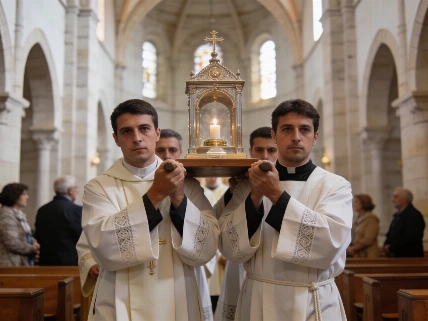
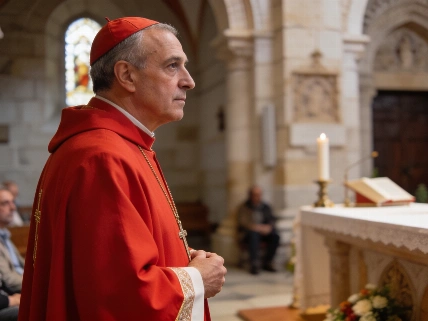
The ceremony took place at the temple of Santísimo Cristo, part of Santander Cathedral, near where Mosquera’s remains rest. Cardinal Marcello Semeraro, prefect of the Dicastery for the Causes of Saints, presided on behalf of Pope Leo XIV. The collective cause recognized the martyrdom of Francisco González de Córdova and 79 companions. They included 67 diocesan priests and seven laypeople, along with three Carmelite religious and three seminarians. The decree set 6 November as the group’s annual liturgical memorial, subject to the conditions prescribed by canon law. The group were victims of religious persecution during the Spanish Civil War. A separate account of killings in 1936 described archaeologists locating 15 bodies in a mass grave at Hornachos cemetery, as detailed in a report on the discovery.
Mosquera was shot on 27 December 1936, aged 36, aboard the prison ship Alfonso Pérez, anchored in Santander’s port. At the time, he was a First Instance Court judge in Santoña. There, he challenged local authorities after they barred the parish priest of the church of the Virgen del Puerto from celebrating Mass and took the church keys. Mosquera had also reported poor hygiene in municipal cells where several prisoners were held. Biographical accounts place his detention on 13 November 1936, followed by his transfer to El Dueso prison and then to the ship.
Born in A Coruña on 1 July 1900, he was the son and grandson of judges. He studied law at Universidade de Santiago. His judicial posts took him first to Las Palmas de Gran Canaria, then to Quiroga in Lugo. He later served in Santoña. In Quiroga, he was removed from his position because of his religious convictions, then later reinstated. His previous judicial postings also included the Canary Islands and Galicia.
After the outbreak of the Civil War, Mosquera was arrested and taken to El Dueso prison. He was later transferred to the Alfonso Pérez with the priest he had defended. Mosquera could have left Santoña before his arrest, but stayed with his wife Carmen and their five children. Their youngest was six months old. Biographical accounts say he declined an opportunity to escape and remained with his family.
The day before the execution, Carmen went to the ship with their eldest child, who was five. A guard let the boy in to see his father. Mosquera’s head had been shaved, and he was wearing overalls. The child never saw him alive again.