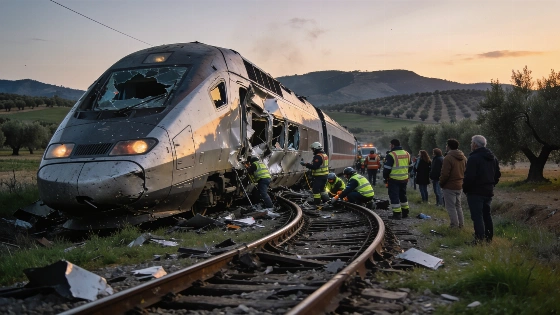
Six months after the Adamuz rail disaster, victims call for a halt to high-speed services. Over 1,000 incidents remain unresolved. Authorities have yet to assign responsibility or deliver full compensation.
Six months after the Adamuz rail disaster, survivors and families of victims are demanding an immediate suspension of high-speed train services on the affected routes, citing persistent safety failures and a lack of accountability. The accident, which took place on January 18, 2026, involved the derailment of iryo 6189 on the Málaga–Puerta de Atocha line at 19:40, followed by a collision with Alvia 2384 just minutes later. The tragedy resulted in 46 deaths and 123 injuries among the 525 passengers on board.
Mario Samper, president and spokesperson for the Asociación de Víctimas del Descarrilamiento de Adamuz, has become the public face of the campaign to halt rail traffic until safety can be guaranteed. According to the group, the psychological and physical consequences for those affected remain severe, while official responses have been slow and insufficient. Victims report ongoing delays in financial aid and compensation, as well as unresolved medical expenses.
The Comisión Investigadora de Accidentes Ferroviarios (CIAF) has highlighted critical flaws in Adif’s track monitoring systems, noting that current technology is unable to reliably detect rail fractures after they occur. Investigators suspect a track break hours before the accident was not reported in time, raising questions about the effectiveness of existing protocols. The judicial investigation has further delayed the CIAF’s final report, with the presiding judge requesting additional documentation and independent analysis.
Public frustration has grown as Adif’s involvement in the investigation is seen by some as an obstacle to transparency. Meanwhile, the high-speed rail network continues to operate under more than 1,000 temporary speed restrictions (LTV), causing widespread delays and dissatisfaction among passengers. In the first quarter of 2026, high-speed rail usage dropped by 21% compared to the previous year, a decline attributed to frequent service interruptions and reduced confidence in safety measures.
Spain’s rail infrastructure has long faced criticism for underfunding and maintenance backlogs. The Adamuz incident has intensified scrutiny of the sector, with both victims’ associations and railway workers calling for urgent investment in safety and clearer lines of responsibility. The situation echoes broader concerns about transport reliability in Spain, as highlighted in recent coverage of regional disruptions such as the ongoing disputes over public transport funding between Catalonia and Madrid.
While some progress has been made in processing compensation claims, many affected individuals continue to pursue legal action and cover medical costs out of pocket. The Adamuz disaster has become a focal point for debate over the future of Spain’s high-speed rail, with calls for comprehensive reforms to prevent further tragedies and restore public trust in the system. The outcome of the ongoing investigations and the response from authorities will likely shape the direction of rail safety policy in the coming years.
For context, Spain’s high-speed rail network is among the largest in Europe, but recent years have seen mounting challenges related to funding, maintenance, and operational reliability. The Adamuz case has brought these issues to the forefront, underscoring the need for sustained investment and transparent oversight to ensure passenger safety and service quality.