Alternativa por Alemania took 43.8 percent in Saxony Anhalt, doubling its previous result. The far-right party led in both rural and urban areas. High turnout and a new left-wing party have changed the region's politics.
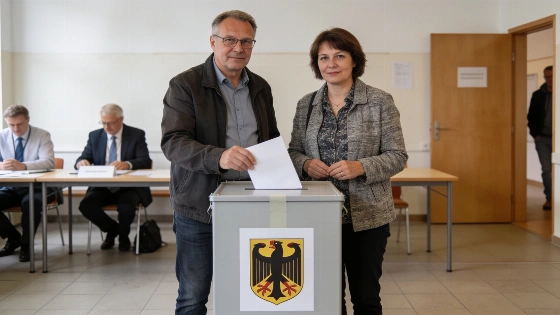
Alternativa por Alemania (AfD) stunned Germany’s political establishment by winning 43.8 percent of the vote in Saxony Anhalt, more than doubling its support since 2021 and leaving traditional parties far behind. The party came within three seats of an outright majority in the regional parliament, a result without precedent in the state since reunification.
AfD’s lead wasn’t limited to rural areas. The party finished first in every municipality, including major cities like Magdeburg and Halle, where it took 33 percent and 30 percent of the vote. In towns with fewer than 5,000 residents, AfD’s share reached 50 percent. Even in cities over 100,000, it managed 31 percent, showing its support now spans both urban and rural voters.
In the 2026 Saxony Anhalt election, the AfD achieved its highest-ever result in any German state, surpassing even its previous record in Thuringia.
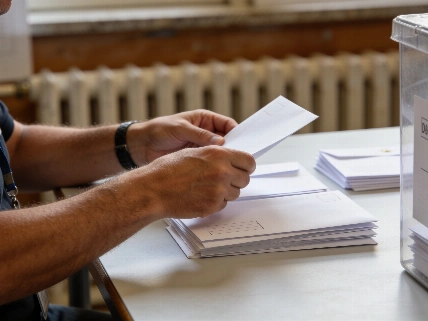
Voter turnout was 78 percent, the highest since 1990 and up 17 points from the last election. Still, the total number of voters was lower than in the first post-reunification ballot, reflecting a shrinking electorate. AfD’s gains came in part from mobilizing previous non-voters: according to Forschungsgruppe Wahlen, 42 percent of its supporters had abstained in 2021.
The Christian Democrats (CDU) suffered a steep drop, falling from 37 percent to just 17 percent—its worst result in the region. The Social Democrats (SPD) and Greens made only small gains, while Die Linke lost ground. A new left-nationalist party, BSW, entered parliament with 5.3 percent and could hold the balance of power, despite its distance from AfD on policy.
According to official data from the Federal Returning Officer, the number of eligible voters in Saxony Anhalt has steadily declined over the past decade, mirroring demographic trends in eastern Germany. This demographic shift has contributed to changes in party support and voter turnout patterns, as noted by several political analysts.
AfD’s support is broad but varies by group. Among men, the party took 50 percent of votes, compared to 39 percent among women. Its strongest showing was among voters aged 35 to 59, where it exceeded 50 percent. The party also led among workers (59 percent), those with low educational attainment (57 percent), and people who described their economic situation as poor (65 percent), according to Infratest dimap for ARD.
Immigration and economic worries were the main concerns for AfD voters. Nearly 90 percent said they were worried about the number of foreigners in Germany and the impact on daily life. The same share feared rising prices, and 80 percent were anxious about keeping their standard of living.
Since its founding in 2013, AfD has steadily gained ground, especially in the former East Germany. In last year’s federal election, it became the second-largest party nationwide with 21 percent, and recent polls put it ahead of the CDU-CSU for the first time. The so-called “cordon sanitaire” that once kept AfD out of power is now under threat, as the new BSW faction could provide the seats needed for a far-right-led government in Saxony Anhalt.
The outcome in Saxony Anhalt marks a clear shift. Traditional parties have lost their hold, and the far right’s ability to attract both disaffected conservatives and former non-voters has changed the political map. As seen in the recent case in Madrid, established parties across Europe are struggling to contain new forces fueled by economic and social discontent. The numbers from Saxony Anhalt show that AfD’s momentum is now a central fact of German politics. Unless mainstream parties find a way to address voters’ core concerns, the far right’s advance may continue.