Alicante has introduced a transparent glass recycling container, letting residents see exactly what happens to their bottles. The move targets persistent doubts about waste separation and hopes to encourage better recycling habits across the city.
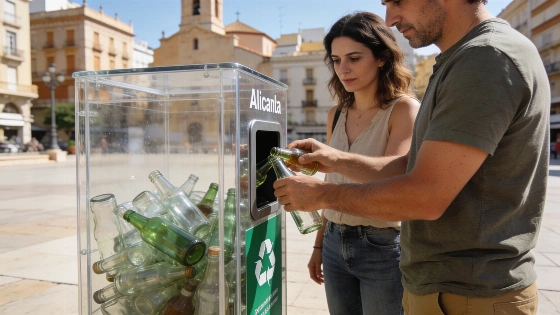
On July 27, 2026, Alicante took a visible step to confront public skepticism about recycling by installing Spain’s first transparent glass recycling container in the Glorieta Deportista Sergio Cardell. Unlike traditional green bins, this new container features a side panel made of methacrylate, allowing passersby to see the glass bottles and jars inside. The goal is clear: to counter the widespread belief that separated waste is ultimately mixed together, a perception that continues to undermine recycling efforts in the city.
The initiative, launched by the Ayuntamiento de Alicante and Ecovidrio, comes after the city collected 6,681 tonnes of glass in 2025. Yet, a recent GfK study for Ecovidrio revealed that 36.5% of respondents still think that different types of waste are combined during collection. Another 11.9% believe recycled products are of lower quality, while smaller percentages suspect recycling destroys jobs or pollutes more than producing new containers.
With over 1,645 green glass containers already in place, Alicante averages 18.2 kilos of glass collected per resident—about 62 bottles per person each year. The transparent container transforms one of these collection points into a public demonstration, offering a direct answer to those who doubt the process. The methacrylate panel does not alter the collection system or the type of waste accepted; it simply makes the contents visible, reinforcing that only glass is deposited inside.
Manuel Sala, Ecovidrio’s regional manager, emphasized that glass can be recycled endlessly without losing quality. Unlike deposit-return schemes, Alicante’s approach focuses on transparency and public education, showing residents exactly what happens after they drop off their bottles. This strategy is designed to build trust and encourage more consistent recycling at home and in local businesses.
The GfK survey, based on online interviews with over 4,000 adults across Spain—including 431 from the Valencian Community—highlights the persistence of recycling myths. In Alicante, 9.9% of residents are classified as “recycling deniers”: people who do not recycle, believe separation is pointless, or use only one bin at home. This figure is notably higher than the national average of 6.4%. Additionally, 40.6% of respondents in the city failed to correctly sort at least half of the ten waste types presented in a test.
According to Ecovidrio, the city’s selective glass collection in 2025 saved more than 4,700 MWh of energy and prevented over 3,875 tonnes of CO2 emissions—the equivalent of taking 1,800 cars off the road for a year. The organization also estimates that 8,000 tonnes of raw materials were conserved thanks to these efforts.
Rafael Alemañ, Alicante’s councillor for street cleaning and waste management, argues that separating waste at home is essential for recovering materials and reducing landfill. In 2025, Ecovidrio ran more than 300 campaigns to mobilize both citizens and the hospitality sector. While some European countries have adopted deposit-refund systems, Alicante’s campaign relies on making the recycling process visible and understandable, aiming to replace doubt with evidence.
Spain’s approach to environmental challenges is evolving, with cities like Alicante experimenting with new ways to engage the public. This mirrors broader trends in the region, such as Morocco’s investment in large-scale desalination projects to address water scarcity, as seen in the recent launch of Africa’s largest desalination plant in Casablanca (major infrastructure efforts to secure water resources).
For Alicante, the transparent container is more than a technical upgrade—it is a test of whether visibility and trust can shift public habits. As the city continues to expand its recycling infrastructure, the real measure of success will be whether more residents choose to separate their waste, confident that their efforts make a difference.