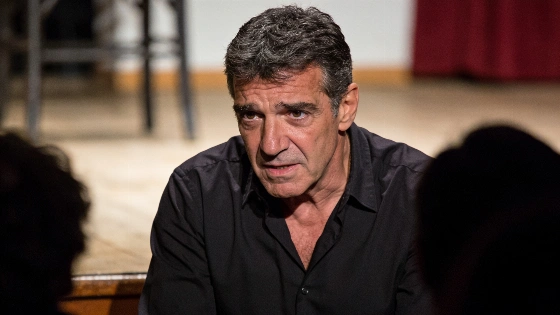
In Málaga, Antonio Banderas said live theatre offers a direct test of reality at a time when artificial intelligence can make images and voices hard to trust. He tied that idea to the shared space between actors and audiences.
On 28 September 2026, Antonio Banderas used a Málaga award ceremony to make a simple point about artificial intelligence and reality. He said live theatre still gives people a direct way to judge what they see. The reason is physical. Actors and spectators occupy the same room. Banderas called the stage a "refuge for truth".
That shared presence sits at the heart of his argument. Theatre does not ask an audience to accept an image at face value. One group of people stands before another. Banderas described that encounter as protection against uncertainty caused by increasingly convincing artificial images. He added that this essential reality "will never change".
Banderas described Málaga as his “Ithaca” after almost three decades away from the city, linking his return to a personal history as well as to his cultural work there.
The actor had just received the Málaga, 60 años de vida compartida recognition for international projection. The award was linked to the 60th anniversary of the San Miguel beer factory in Málaga. The ceremony focused on the city and the public figures connected to it.
Diario Sur reported that Málaga City Council, Unicaja Baloncesto and Manuel Villafaina were also included in the recognition. Banderas received his award for promoting Málaga beyond Spain. He was also recognised for supporting the city's cultural life through Teatro del Soho CaixaBank, a project with which he has kept a close connection.
In the days before the Málaga ceremony, Banderas’s name and likeness were used in an AI deepfake scam advertising a supposedly medical product. Reports by La Vanguardia and Euro Weekly News said the incident involved a false remedy, underlining the practical stakes behind his concern about fabricated images and voices.
The ceremony had a celebratory purpose. Banderas used it to speak about a wider cultural problem. His comments also fit his continuing focus on culture, artistic work and Málaga's local scene. Recent coverage of Teatro del Soho and its productions has carried the same themes.
His claim is not that theatre can stop artificial intelligence. Nor does he say it can settle every dispute about digital authenticity. His point is narrower and easier to test. A live performance cannot be separated from the people present for it.
The audience sees the actor. The actor sees the audience. That creates a shared event rather than an image that has been edited or generated elsewhere.
This distinction matters because Banderas was talking about the status of images. Viewers may no longer know whether a scene is real. Theatre offers another basis for trust. The story matters, but so does the encounter that makes the performance possible.
Málaga added a personal link to the argument. The award recognised Banderas's work beyond Spain, yet his message returned to the most direct form of performance. People meet in the same room. Nothing remote is needed.
For readers following Málaga's cultural life, the event also fits the city's use of public occasions to connect entertainment with civic identity. An earlier cultural report described another major Spanish city placing live performance at the centre of a public celebration. The comparison does not change Banderas's argument. It shows why the physical event still matters to the way culture is experienced.
Banderas's position is direct. Artificial intelligence may make images harder to authenticate. Theatre offers a relationship that people can observe instead of merely being asked to trust. In Málaga, he defended that relationship as live performance's lasting strength. When screens raise doubts about reality, the room shared by actors and spectators becomes theatre's clearest fact.