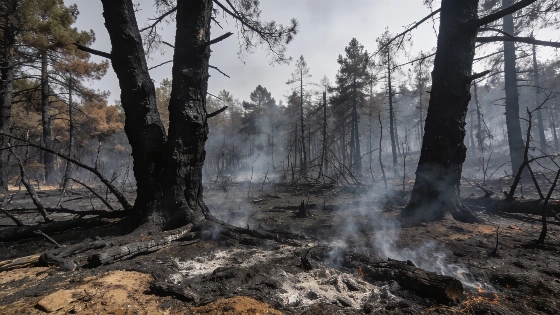
Aragon faces a sweeping overhaul of its wildfire response after losing nearly 36,000 hectares this summer. President Jorge Azcón pledges 51 million euros for new resources. Political divisions over climate change remain sharp.
Aragon’s government is rushing to rebuild its wildfire defenses after a summer that saw nearly 36,000 hectares burned, dozens of towns evacuated, and the death of a UME firefighter during operations. President Jorge Azcón has announced a 51 million euro emergency package for new helicopters, amphibious planes, and a 30% increase in firefighting staff. The region has faced criticism for having the lowest number of firefighting personnel per resident in Spain and for depending heavily on outside help to control the fires. According to Heraldo de Aragón, the package was announced on September 10, 2026, with more than 42 million euros set aside for prevention and firefighting, and 8.6 million euros for victim aid and recovery.
The political fallout was immediate. In the first session of the new parliamentary term, Azcón defended his government’s response, saying the extra funding is a direct answer to the scale of the disaster. He called the new resources a form of self-critique, admitting that Aragon’s existing capacity was overwhelmed this year. The plan also includes a new regional emergency agency and firebreaks around vulnerable towns to reduce future evacuations. Diario del AltoAragón reported that the government acknowledged its own resources fell short, leading to more requests for federal help than any other region this summer.
The summer wildfires in Aragon led to the evacuation of 19 towns and the tragic death of UME corporal Javier García during operations in Las Peñas de Riglos.
Socialist opposition leader Pilar Alegría used the moment to propose a cross-party pact on wildfire prevention and climate change. She pointed out that Aragon had to ask for more federal help than any other region this summer and called for cooperation on climate and fire policy, warning Azcón not to reject the offer again. According to Cadena SER Aragón, the government’s plan includes four new heavy-lift Mike helicopters, two amphibious planes, six water tankers, three heavy vehicles, and nearly 100 new specialists, plus about 100 more in 15 ground brigades.
The climate debate remains tense. Azcón said he does not deny climate change but downplayed its role in the wildfire crisis, accusing the opposition of political posturing. Vox, the PP’s coalition partner, refused to discuss climate at all. When pressed by CHA deputy Jorge Pueyo, Vox’s Sergio Marco brushed off the question with a remark about dressing for the weather, avoiding any real answer. This divide has made it harder to build a unified strategy for future fire seasons, as several regional media outlets have noted.
Meanwhile, firefighters have been in a standoff with the public company Sarga since August, demanding more staff and better equipment. A tentative agreement reached just before the parliamentary session led to the cancellation of a planned protest that would have overshadowed the government’s relaunch. The new funding is expected to address many of the firefighters’ demands, though details on timing are still unclear.
The government has committed to funding up to 215 new operational firefighting positions starting next year, following a preliminary agreement with SARGA that ended the strike. This expansion is part of a broader institutional reform to strengthen Aragon’s emergency response capacity.
— El Español Aragón
Financial support will also go to those hit hardest by the fires. The government has set aside over two million euros for affected farmers, three million for small businesses and self-employed workers, and additional funds for repairs to homes, roads, and municipal infrastructure. Farmers who helped with firefighting will receive compensation, which Azcón highlighted as part of the recovery effort.
Aragon’s vulnerability is not new. As reported earlier, the region has faced major fire emergencies before, often revealing gaps in local preparedness and coordination. This summer’s destruction has forced a reckoning with years of underinvestment and the political cost of inaction.
The government’s promise of new aircraft, vehicles, and a dedicated emergency agency marks a shift toward a more organized, long-term approach. But the lack of agreement on climate policy and the reluctance of coalition partners to address the issue leave Aragon’s strategy open to future political disputes. Whether these measures will lead to faster, more effective responses next fire season remains to be seen. For now, Azcón’s administration is relying on new funding and equipment, but without political unity, the risk of repeating the same cycle remains.