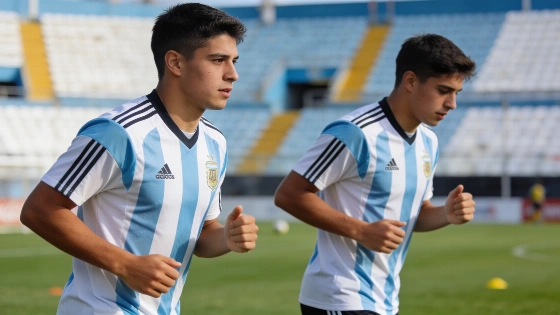
Argentina will play three home friendlies in late September and early October. The matches mark the start of a new era after Lionel Messi's departure. The official status of these games remains unclear.
Argentina’s national team is entering a new chapter, preparing for its first matches since Lionel Messi’s departure. The Argentine Football Association (AFA) has arranged three friendlies at home: Bolivia, Burkina Faso, and Benín, all within a week. But there’s still no word on whether FIFA will officially recognize these games, leaving fans and players unsure about what’s at stake.
The schedule is straightforward. Argentina faces Bolivia at the Mario Alberto Kempes stadium in Córdoba on September 30. Then, the team heads to Buenos Aires for two matches at River Plate’s Monumental stadium—Burkina Faso on October 3 and Benín on October 6. These will be Argentina’s first games since the 2026 World Cup. The AFA’s announcement, however, doesn’t say if FIFA will count them as Class A friendlies. That matters: only Class A matches affect FIFA rankings and player records. Reports from AP and regional media confirm the dates and venues, but the final FIFA classification is still pending.
Burkina Faso and Benín will be facing Argentina on Argentine soil for the first time in history, marking a unique moment for both African teams and local fans.
For coach Lionel Scaloni, these matches are more than just a routine set of games. With Messi gone, Scaloni has to build a squad that can find a new identity. The player list hasn’t been released yet, but it’s expected to show the first signs of a generational shift after years of stability under Messi. There’s pressure to find new talent and reshape the team’s core. Some local media point out that the "post-Messi" label might be premature, as there are reports Messi could still be named in the preliminary squad.
By hosting all three matches in Argentina, the AFA is aiming to reconnect with local fans after the World Cup. Choosing Córdoba and Buenos Aires as venues should draw big crowds, but the lack of clarity on FIFA status leaves the competitive value of these games in question. Players and coaches are preparing without knowing if these appearances will count toward their official records. Several sports analysts note that the AFA is still waiting for FIFA’s confirmation, which would affect rankings and player statistics.
While most attention usually goes to major tournaments and finals—like the recent announcement of Camp Nou hosting the 2029 Champions League final—these friendlies are a different kind of test. They will show how Argentina adapts without Messi, both on the field and with its supporters.
The AFA’s strategy to stage all friendlies within Argentina is seen as an effort to maximize home support and capitalize on the domestic fan base in Córdoba and Buenos Aires. Several sources note that the federation is using this window, which falls within the official FIFA international calendar from September 21 to October 6, as a key opportunity to evaluate new players and set the tone for the post-World Cup cycle.
The AFA’s silence on FIFA classification isn’t just a technicality. It adds to the uncertainty around the national team’s direction and the stakes for players hoping to secure a spot in the new cycle. Until the squad list is out and the match status is clear, Argentina’s football story is in a period of transition and waiting. The way the federation handles this moment will shape the next few years, and the lack of clear information so far hasn’t made the transition any easier.