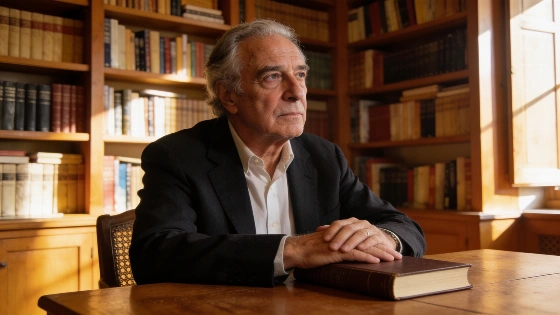
At 74, Arturo Pérez-Reverte calls witnessing Europe's decline a privilege. The acclaimed author prepares to release new novels while reflecting on the erosion of the world he once knew.
Arturo Pérez-Reverte is blunt about the times he lives in. Now 74, the Spanish novelist and former war correspondent says watching Europe and the West come apart is a privilege—one that comes with the sharpness and uncertainty of old age. He knows he may not have many years left, but insists that seeing the collapse of what once felt solid is, for him, an experience with its own intensity.
He doesn't dress this up as nostalgia or drama. Pérez-Reverte, whose books have reached readers far beyond Spain, describes the end of his world as a simple fact. "I was educated for a world that no longer exists," he says. Both the strengths and the flaws of that lost era shaped him. His openness about mortality and the loss of old certainties stands out in a culture often fixated on youth and progress.
In early September 2026, Pérez-Reverte ended his long-standing collaboration with XL Semanal and became a regular columnist for EL MUNDO, writing under the column 'Patente de corso'.
In the next year, Pérez-Reverte plans to publish three books: 'Misión París', the latest in the 'capitán Alatriste' series, 'Enviado especial', and 'La hipótesis más peligrosa', due out October 20. Despite this steady output, he says he's more concerned with the shifting ground beneath his feet than with literary milestones. He describes a daily habit of asking which truths will fall away next, and finds creative energy in the contradictions and doubts that come with age.
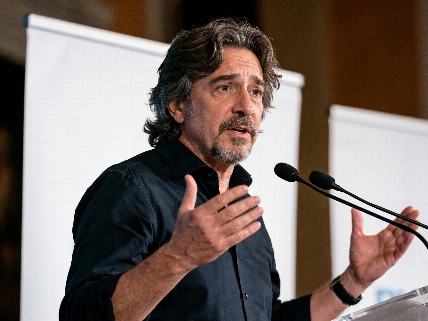
Speaking with young people at a BBVA event and in an interview with Argentina's 'La Nación', Pérez-Reverte describes trading youthful certainty for a fascination with uncertainty. As he gets older, he says, the list of things he's sure about shrinks, replaced by more and more doubts. This, he claims, is why he keeps writing novels—drawn to the gray areas where old convictions no longer fit.
For Pérez-Reverte, Europe's decline is not an abstract idea but something he sees and feels. He talks about watching a civilization slowly come apart, and does so without bitterness. Instead, he approaches it with curiosity, saying these are simply the rules of history. The sense of watching a world fade is not his alone; others who have shaped Spanish culture, like Rosa Maria Duran, have also been recognized for preserving identity in times of upheaval, as reported earlier.
According to Heraldo de Aragón, Pérez-Reverte has recently emphasized in interviews the risks of social instability and violence, referencing the situation in Ceuta and warning that pushing people to the brink can lead to uncontrollable outbursts. His renewed focus on themes of power and human danger reflects his ongoing engagement with current European crises and identity debates in 2026.
Heraldo de Aragón
Pérez-Reverte's outlook is a mix of resignation and engagement. He doesn't try to stop the changes he sees, nor does he retreat into complaint. Instead, he documents, questions, and writes—using his platform to probe the uncertainties that shape both his own life and the fate of the West. In a time when many pretend things will last forever, Pérez-Reverte's willingness to face the end of an era directly is striking. He reminds us that clarity often comes not from certainty, but from the nerve to watch and record the world as it really is, even as it slips away.