On August 12, Asturias launched a pioneering system with the DGT to track traffic at 16 beaches in real time. The initiative, timed with the solar eclipse, aims to improve mobility management and could shape future emergency and tourism planning.
On August 12, as thousands prepared to witness a rare total solar eclipse, Asturias and the Dirección General de Tráfico (DGT) rolled out a new system designed to monitor traffic flows to 16 of the region’s most visited beaches. The move came in response to forecasts of exceptionally high visitor numbers along the coast, with authorities estimating between 400,000 and 1.5 million additional journeys across Spain for the event.
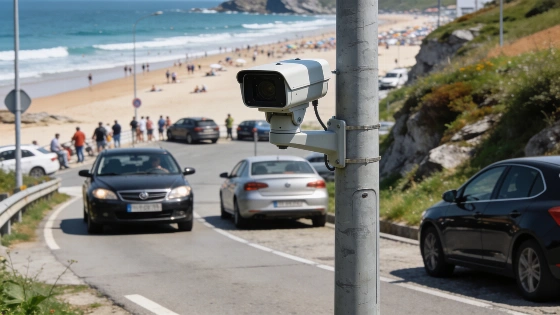
The system integrates ground-based sensors and artificial intelligence-powered cameras, feeding live data into the Digital Twin of Asturias’ territory. This platform compiles information from multiple sources to provide an up-to-date picture of mobility patterns, allowing authorities to detect congestion and make informed decisions about access and parking in real time.
Technology in Action
Unlike traditional traffic monitoring, the new approach combines sensor networks with AI-driven visual analysis. Data is processed centrally and shared with the DGT’s management systems, enabling rapid response to bottlenecks or incidents. Variable message panels on highways and main roads can then alert drivers to delays, restrictions, or alternative routes before they reach affected areas.
This pilot marks one of the first operational uses of Asturias’ Digital Twin, a project announced earlier in 2024 to modernize traffic management in coastal zones. The system’s deployment during the eclipse provided a real-world test of its ability to handle sudden surges in visitor numbers, especially in areas where parking and road capacity are limited.
Direct Communication with Drivers
Information gathered by the sensors is not only used by local authorities but is also integrated into the DGT’s national traffic management network. This allows for immediate dissemination of alerts through established channels, including roadside panels, digital platforms, and the DGT’s 011 phone service. During the eclipse, updates were also provided via social media, navigation apps, and radio broadcasts.
The initiative reflects a broader shift toward connected mobility solutions in Spain, with the DGT investing in digital infrastructure to improve road safety and efficiency. Technologies like the DGT 3.0 platform and real-time incident reporting are increasingly central to how traffic information reaches the public.
Lessons for the Future
While the eclipse served as a unique stress test, Asturias’ government sees broader potential for the system. Officials plan to evaluate its effectiveness for future special operations, including emergency response, civil protection, and tourism management. The ability to monitor and react to rapid changes in traffic demand could prove valuable during summer peaks, festivals, or unexpected events.
Asturias has been developing its connected mobility strategy since at least 2024, focusing on digitalizing road networks, installing tunnel sensors, and building real-time data transmission capabilities. Collaboration with the DGT and national transport authorities is seen as key to scaling these innovations beyond the pilot phase.
As the region reviews the results from August 12, the experience may set a precedent for how Spanish coastal destinations manage mobility challenges in the years ahead.