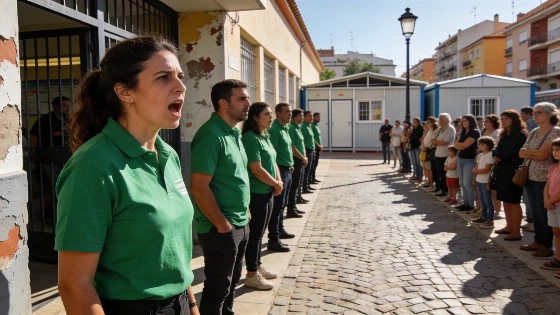
In Valencia, the Teachers’ Strike Dispute Has Shifted Focus from Education Issues. A conflict has erupted in Valencia over the teachers’ strike. Authorities are shifting the discussion from education problems to the conduct of educators. The stakes are the future of the system and conditions for students.
A heated debate has erupted in the Valencian Community over the teachers' strike. Instead of discussing key educational issues—overcrowded classrooms, lack of funding, and high levels of early school leaving—attention has shifted to the teachers' behavior and their demands. The regional authorities have effectively redirected public discussion from the heart of the conflict to questioning the legitimacy of the protesters themselves.
In recent weeks, the region has been focusing less on the reasons for the strike and more on questions surrounding how and when teachers protest, as well as to what extent their demands are related to salaries. Observers note that this strategy allows officials to avoid a direct conversation about the state of the education system and its funding. As a result, many stakeholders believe the real problems are left unaddressed.
The surge in protest activity in Valencia is not accidental. The region has long faced high rates of early school leaving, which are significantly higher than in other parts of the country, such as the Basque Country. In areas where investments in education have been ongoing for years, the situation with infrastructure and learning conditions looks much better. In Valencia, however, many schools are still operating in conditions far from modern standards, and overcrowded classrooms and limited resources have become the norm.
According to several educators, the authorities' attempts to shift the focus from discussing the quality of education to questions about teachers’ behavior are a deliberate communication tactic. This approach is known as whataboutism: when criticism is deflected by redirecting the conversation to unrelated topics in order to blur the core of the conflict. As a result, discussions about school conditions and the need for investment are replaced by debates over details not directly related to the quality of education.
Judging by recent data, improvements in Valencia’s education system occur only under sustained pressure and active protests. The region’s history shows that significant changes in schools and other social spheres rarely happen without open conflict and persistent demands from society. Whether temporary solutions like studying in 'barracks' will become a thing of the past directly depends on whether attention can be brought back to the real problems of the system.
For reference: according to Eurostat, Spain has ranked among the EU countries with the highest rates of early school leaving in recent years. In the Valencian Community, this rate consistently exceeds the national average. Investments in education in Spain have traditionally lagged behind the funding levels of several other European regions. The issues of infrastructure modernization and reducing classroom overcrowding remain among the most pressing for the country’s education system.