Court Denies WWF Bid to Suspend New Status of Doñana Marshes. Spain’s National Court has rejected WWF’s request to temporarily halt the revision of the Doñana marshes’ boundaries. Environmentalists feared irreversible consequences for the nature reserve. The ruling concerns areas in Huelva and Seville.
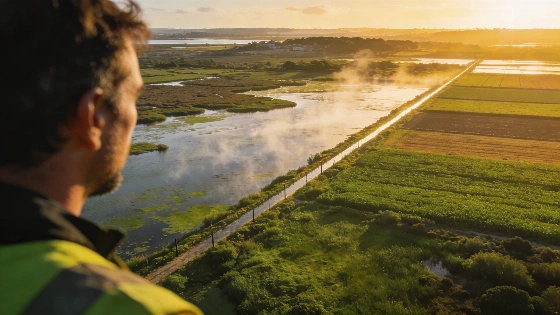
Spain's National Court has rejected WWF's request for a temporary suspension of the review of the boundaries of the state-owned marine and coastal fund in the Doñana marshlands area. The court's decision concerns a section nearly 119 kilometers long, affecting territories in the municipalities of Hinojos and Almonte (province of Huelva), as well as Aznalcázar (Seville). The perimeter includes land owned by WWF itself, including the Marismas del Caño de Guadiamar and Cerrado de Marilópez plots that are within the national park.
WWF insisted on an urgent suspension of the ministerial decision, arguing that implementing the new status before the final court decision could cause irreversible harm to unique ecosystems. Environmentalists warned of risks to freshwater marshes and specially protected natural complexes, as well as the possible revision of key park management documents such as the Guadalquivir Water Resources Plan and conservation regulations.
However, government representatives argued that the boundary review is purely declarative and does not entail any immediate physical changes to the area or interference with the water regime. After considering both sides' arguments, the court concluded that there are no grounds for a temporary blockade of the decision. The ruling emphasizes that the new status itself does not involve construction work or intervention in nature; it merely legally consolidates state ownership of the land in accordance with the coastal law.
The court also noted that including the marshes in the state fund strengthens administrative protection of the area. At the same time, the current management plans for the Doñana Park remain in force, and the rights of former landowners to use the plots may be exercised through obtaining special permits. The substance of the dispute will be considered separately, and the present decision concerns only the denial of interim measures.
WWF has already announced its intention to appeal the ruling. Organization representative Juanjo Carmona emphasized that the court did not consider the merits of the arguments, but merely assessed the need for urgent suspension. According to him, the organization will continue to seek the cancellation of the border revision, believing that the new interpretation of the marshes' status does not correspond to historical and scientific data. WWF does not deny the presence of tidal wetlands in Doñana, but disagrees with the scale proposed by the ministry.
Questions regarding the status and management of specially protected areas in Spain regularly spark disputes between environmentalists and the government. Similar conflicts over environmental restrictions and their impact on local communities have arisen in other regions of the country as well—for example, during discussions on lifting restrictions due to African swine fever in Catalonia.
For reference: Doñana National Park is one of the largest nature reserves in Europe and is included on the UNESCO World Heritage List. Its ecosystems are protected by both Spanish and international law. Any revision of boundaries or land status in such areas is always closely monitored by environmental organizations and local authorities.