Narciso Michavila says Pedro Sánchez can no longer be expected to finish first in the general election on 29 November. Spain’s Ministry of Foreign Affairs lists that date for the Cortes Generales election. The GAD3 president and founder reported a sharp change in voting intentions after Wednesday’s rail disaster in Urda, Toledo. He said Alberto Núñez Feijóo’s PP could improve on its 2023 result.
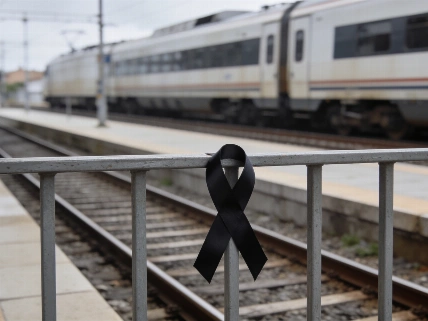
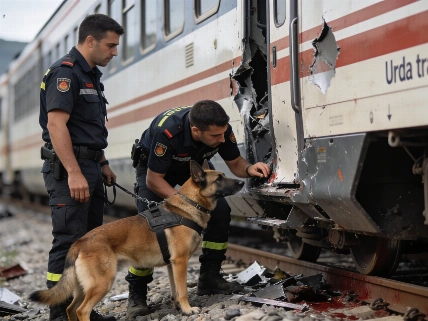
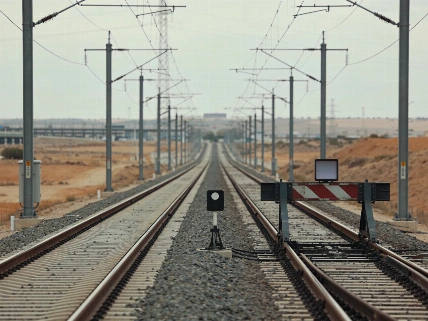
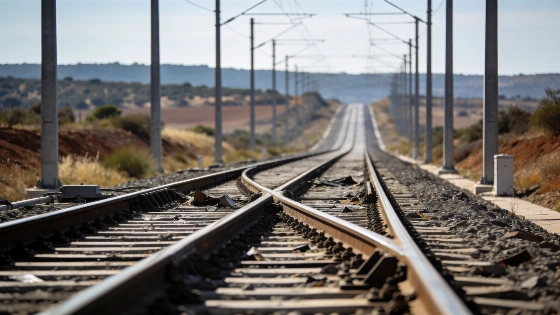
Michavila linked the shift to the crash in a post on X on Saturday. His account describes a change in polling, not an election result: voters have yet to go to the polls. The accident occurred on 28 October on the Madrid-Seville high-speed corridor near Urda station. EFE reported that two carriages of the stationary Iryo service derailed and fell down an embankment after a Renfe AVE train travelling toward Seville collided with it.
Before the crash, GAD3 was already detecting higher expected turnout and a rightward movement driven by younger voters. A GAD3 barometer published by ABC on 12 October projected the PP at 31.4 per cent and 133 seats, compared with 137 seats in the 2023 election. It projected 107 seats for the PSOE, against 121 in 2023. Vox was projected to win 65 seats, up from 33, while Sumar, now called Frente Amplio, was projected to take 10, down from 31. The earlier projections also suggested Vox could double its seats without reaching 19 per cent and pointed to a sharp decline for Sumar.
The same polling put ERC above 10 seats in Catalonia and showed Bildu leading in the Basque Country. GAD3 had previously seen the PSOE recover ground during the pre-campaign, with a possible parliamentary majority alongside its partners still in play. Michavila now says that prospect has faded, as has the party’s chance of finishing first. He also expects the PSOE to record its worst-ever general election result in Andalusia, in line with its recent regional election performance.
For the PP, the change is also significant. Earlier polling indicated that Feijóo could govern, but with fewer seats than the party won in 2023. Michavila now says the PP could surpass that result. He added that most voting shifts occur during a legislature, while campaigns have growing influence. Four weeks remain before election day.
GAD3’s projections also point to a stronger PP position in the Senate. The party would secure what Michavila calls a “majority plus” through an agreement with Vox, in response to the PSOE and Frente Amplio alliance in the upper house. The threshold is three-fifths of the Senate, or 160 of its 266 seats. An absolute majority is 134 seats.
That reinforced majority would allow the PP to choose ten of the 20 members of the General Council of the Judiciary without needing support from other parties. It would also give the party enough votes to select four of the 12 Constitutional Court judges. The PP could also choose six of the 12 members of the Court of Auditors. A constitutional amendment under the ordinary procedure would still require three-fifths support in both the Senate and Congress.
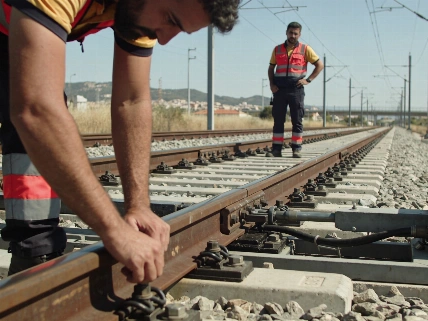
The crash has also prompted calls for Transport Minister Óscar Puente to resign from the PP and Vox, as well as from Frente Amplio and trade unions, after his initial account blamed the Atocha worker responsible for handling the crisis on Wednesday morning. Puente is due to appear before Congress’s Permanent Deputation on Tuesday. At a press conference, Puente said an LZB automatic signalling failure at about 8:30 a.m. triggered preventive stops for at least six trains across a 63-kilometre section. Adif suspended traffic on the corridor. The government declared three days of national official mourning, from midnight on 28 October through midnight on 31 October. Royal Decree 949/2026 formalized the mourning period. The political debate follows the disaster covered in earlier reporting on the crash.