Ministry of Transport Demands Return of Payments to Victims of Madrid–Seville Line Accident. The Ministry of Transport has filed a court motion to recover advance payments made to victims of the accident near Adamuz. The decision is related to the scale of the tragedy and the need to control compensation disbursements.
The Ministry of Transport and Sustainable Mobility of Spain has initiated the process of reclaiming funds paid to victims of the January 18 railway disaster in Adamuz (Córdoba). The incident resulted in 46 deaths and 123 injuries. By filing an official request with the court in Montoro, the ministry seeks to be recognized as a 'civil plaintiff' in the case, enabling the right to recover advance compensations if the court finds those responsible liable.
The ministry refers to the royal decree of January 27, which established the compensation amounts for victims of the accidents in Adamuz and Gélida (Barcelona). According to the document, families of the deceased may receive up to €216,000, while the injured are entitled to sums ranging from €4,800 to €168,000. The decree specifically states that the state has the right to reclaim advances if the court orders the responsible parties to pay civil liability compensation.
Obtaining the status of civil plaintiff will allow the ministry not only to claim reimbursements, but also to access all investigative materials. This includes reports from the Civil Guard and the Railway Accident Investigation Commission (CIAF), which previously appeared in the press through unofficial channels. The head of the ministry, Óscar Puente, has personally overseen the situation from the start, since Adif—the operator of the Madrid–Seville line where the tragedy occurred—falls under his supervision.
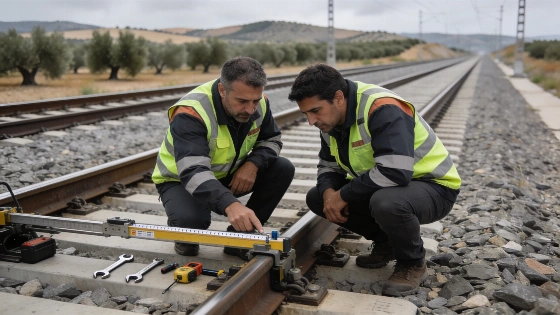
According to preliminary information, the cause of the accident may have been a crack in the rail or a welding defect at kilometer 318 of the route. As a result, on the evening of January 18, an Iryo train derailed, after which it was struck by an oncoming Alvia train from Renfe. The latter also became part of the investigation: Renfe CEO Álvaro Fernández Heredia told the Senate that the company was one of the victims of the incident, as the driver could not have prevented the collision.
An examination of the damaged rail is expected to determine whether the defect was caused by a manufacturing flaw in ArcelorMittal’s 2023 production or an error during alumino-thermic welding carried out by Maquisaba under the supervision of Redalsa and Ayesa. In recent months, the ministry has repeatedly faced accusations regarding irregularities in repairs on the Madrid–Seville line, as well as the lack of early defect detection systems that could have identified the problem 22 hours before the accident.
The tragedy in Adamuz and the accident on Rodalíes line 4 on January 20, which resulted in the death of a train driver, have sparked political controversy and caused a crisis of trust among passengers and railway workers. In February, the ministry announced additional investments in infrastructure maintenance and an emergency plan for the Rodalíes network in Catalonia.
Issues of transport safety and compensation regularly draw public attention in Spain. For example, the problem of congestion on the route between Madrid and Toledo was previously discussed, when local authorities demanded the removal of tolls on the alternative road — you can read more about this in the article about the demands of Toledo residents regarding the AP-41.
For reference: the Madrid–Seville line was Spain's first high-speed railway, opened in 1992. Adif is responsible for the infrastructure, while Renfe and Iryo handle transportation. Since the market was liberalized in 2020, several operators have been running services on the line. In recent years, issues concerning the technical condition of the tracks and oversight of contractors have remained a focus for industry regulators and the public.