Isabel Díaz Ayuso publicly challenged Pedro Sánchez after Junts refused to back key housing decrees. The Madrid leader claims the government is stoking division and preparing for early elections, as protests and vandalism grip Puerta del Sol.
News of Junts blocking the government’s housing decrees hit live on air. Isabel Díaz Ayuso, president of the Community of Madrid, did not hold back. She went straight for Pedro Sánchez. Her words were sharp: “Pedro Sánchez is taking Spain to a point of no return.”
Ayuso’s attack was not just for show. She accused the prime minister of acting with “impunity.” She said the government was not only counting votes, but also stirring up social tension on purpose. “Sánchez has decided to take Spain to revolution. He is preparing the ground for elections,” Ayuso said. She tied the failed vote to the tense mood in Madrid’s Puerta del Sol.
The protest camp at Puerta del Sol began on the evening of September 26, following a demonstration against the eviction of Maricarmen, and was confirmed to still be in place as of October 1.
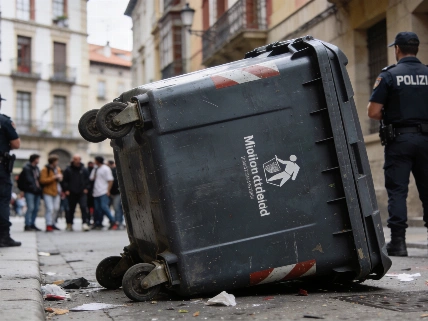
Since Saturday, protesters have camped in the center of Madrid. They want action on the housing crisis. The government calls the protest “peaceful” and “civic.” It has refused to break it up. Ayuso sees something else. She points to threatening chants, angry banners, and vandalism aimed at her. Someone projected her image onto the Real Casa de Correos. The Oso y el Madroño statue was damaged. Ayuso called this “pure Nazi-style signaling.” She said the attacks were not just about her. “They target anyone who stands up to four señoros who are really a minority.”
Ayuso has now gone to court. She wants a judge to protect what she calls the rights of citizens in Puerta del Sol. She says the government’s refusal to act is “inaction.” She insists “the rule of law and the force of law” must win out. Her legal move comes as the protest blocks much of Madrid’s kilometer zero. The story has gone national. As reported earlier, city officials and police unions have already called for the camp to be cleared.
Ayuso says the government’s defeat was never in doubt. She was surprised anyone thought Junts or the PNV would back the decrees. She called the whole process a “shell game.” She accused Sánchez of setting up the loss to trigger early elections. “Junts cannot vote any other way, and Sánchez knew it from the start,” she said. For Ayuso, the failed vote was a step toward the ballot box.
According to several independent Spanish and international outlets, Junts' opposition to the housing decrees was decisive, as the government also needed support from PNV and Coalición Canaria to secure a majority. The lack of backing from Junts made the passage of the decrees highly unlikely, highlighting the fragile state of the governing coalition.
The fight over housing and the protest in Puerta del Sol have become a flashpoint. Ayuso’s words and her legal action show how deep the split runs between Madrid’s regional government and the national executive. The government’s agenda is now at risk. Public order in the capital is under pressure. Early elections look more likely. This week’s events show a government struggling to keep its coalition together. The opposition is ready to pounce on any sign of weakness. Ayuso’s warnings and her claims of provocation by Sánchez are not just politics. They point to real and growing instability at the heart of Spanish politics.