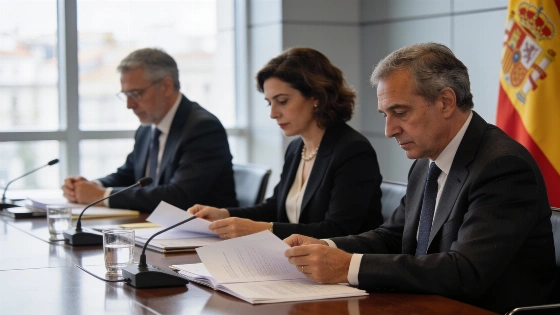
Three former Madrid presidents will receive up to €33,750 annually for attending advisory meetings. The appointments restore public payments after a decade-long pause. The move follows a new statute approved by Ayuso’s government.
Madrid’s regional government has reinstated lucrative public payments for former presidents, appointing Alberto Ruiz-Gallardón, Esperanza Aguirre and Cristina Cifuentes as elective members of the Comisión Jurídica Asesora. Each will receive €750 net per meeting attended, with the potential to earn over €33,000 annually if they participate in all sessions. This marks a significant return to public compensation for ex-leaders, a practice halted in 2015 when the previous consultative council was dissolved.
The appointments, made by Isabel Díaz Ayuso’s administration, come after the approval of a new statute for former presidents in 2025. Under the revised rules, ex-presidents who served at least two years and began their term at the start of a legislature can apply for these advisory roles. The compensation is tied to attendance, with up to four plenary sessions per month, translating to €3,000 net monthly if all are attended. The annual report for 2025 recorded 45 plenary meetings, setting the maximum possible earnings at €33,750 per person for full participation.
The new arrangement replaces the previous system, which provided former presidents with a fixed monthly salary, official car, and assistant. Now, the advisory role is limited to six years, extendable to twelve for those who governed more than four years. The session fee was initially proposed at €459 but was ultimately set at €750, a 63% increase. The payment is incompatible with other public indemnities or salaries, ensuring that only one form of compensation is received at a time.
Additional benefits for former Madrid presidents include two support staff, auxiliary resources, a car with driver, and representation expenses for two years after leaving office—or four years if their term exceeded four years. They also retain access to institutional facilities, protocol services, reimbursement for institutional activity expenses, and security measures as needed. These changes, introduced by Ayuso’s government, restore a range of privileges and financial support for ex-presidents, reversing the austerity measures of the previous decade.
Not all former leaders are eligible. The requirements exclude those who did not serve a full term or did not begin their mandate at the start of a legislature, such as Ignacio González, Ángel Garrido and Pedro Rollán. The move has drawn attention to the broader trend of regional governments revisiting benefits for former officials. In a related development, Madrid’s regional government recently allocated €1 million to support businesses affected by wildfires, as detailed in a previous report on regional spending priorities.
For context, the Comisión Jurídica Asesora serves as a key consultative body for the Community of Madrid, providing legal opinions on administrative matters. The restoration of payments and privileges for former presidents reflects ongoing debates in Spain about the appropriate level of support for public officials after their terms end. While the new statute aims to formalize and limit these benefits, the financial implications remain significant, especially as public scrutiny of political spending continues to grow.