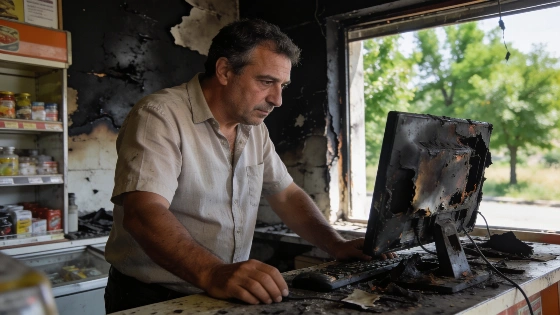
The Community of Madrid has announced a €1 million emergency fund to help self-employed workers and small businesses in the Sierra Oeste region recover from wildfires that swept through nearly 27,000 hectares this summer. The regional government says the funding will restore impressive IT infrastructure and help affected businesses resume operations as soon as possible. The fires also caused extensive agricultural losses: the Union of Small Farmers and Ranchers of Madrid estimated that 18,500 hectares of useful agricultural land burned.
Under the scheme, eligible businesses can apply for grants of up to €5,000 to replace computers, point-of-sale terminals, network devices and connectivity solutions lost in the fires. Support also covers data recovery and system restoration, along with management, e-commerce and cybersecurity tools. The initiative is part of a broader recovery effort addressing disruption to local businesses, agriculture and infrastructure.
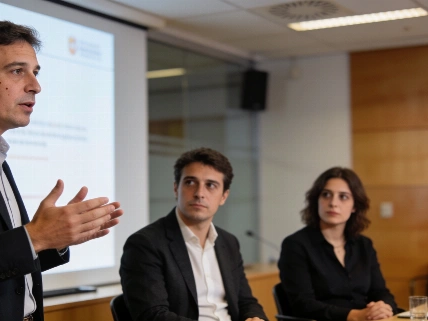
Miguel López-Valverde, the regional minister for Digitalization, said the focus is on restoring the technological backbone of local businesses. He noted that the digital recovery effort is one of more than 50 measures the regional government has outlined to address the disaster’s aftermath. The grant program is expected to open for applications in the coming days. Only self-employed individuals and small businesses directly affected by the wildfires are eligible.
The plan also includes specialized advisory services. Experts will assess the impact on each business and guide owners through available recovery options. Expenses incurred since the emergency began will qualify for reimbursement, allowing businesses to act before the official call for applications.
López-Valverde said that, for many, losing IT equipment and connectivity is as critical as physical damage to business premises. The government aims to help owners restore these tools and provide support throughout the recovery process.
The €1 million digital fund is one part of a wider regional business-recovery package. In September, the Community of Madrid approved an €8 million program for self-employed workers, offering €5,000 to restart activity and a further €1,798, equivalent to six months of social-security contributions. A separate €6 million line provides small and medium-sized businesses with €10,000, rising to €15,000 when fire damage forces a premises to remain closed.
On 21 October, the regional government announced a further €3 million investment-aid scheme for businesses and self-employed workers in affected municipalities. Eligible businesses must have begun operating before 23 July 2026, when the emergency was declared to be of national interest. The scheme can cover 100% of eligible expenditure, up to €100,000, paid in advance in a single installment without guarantees. Eligible investments include machinery and equipment, along with vehicles, furniture, buildings and fixed installations. The costs must have been incurred from 1 August 2026 through 31 August 2027, information from the Community of Madrid.
During the announcement, Aránzazu Povedano, mayor of San Martín de Valdeiglesias, criticized the central government for not visiting the affected areas after the fires were brought under control. She called for a decree allowing local councils to temporarily suspend fiscal rules, citing unforeseen disaster-related expenses. Povedano also lamented the environmental loss, describing the region as once “spectacular and extraordinary.”
The fires also affected livestock operations. The regional government said it distributed nearly 500,000 kilograms of fodder as part of a reconstruction package that included 43 urgent measures. Separate regional reporting recorded controlled-grazing measures across 5,652 hectares in 2026. Ecological experts cited by El Confidencial linked insufficient grazing and accumulated vegetation fuel to the fire’s severity. The publication reported that three fires that began in Villa del Prado and San Martín de Valdeiglesias merged during July. Navas del Rey was identified as the worst-affected municipality, with 85% of its territory burned.
Recovery measures extend beyond businesses and agriculture. A separate €1.1 million program for affected residents includes more than 50,000 hours of in-home assistance for older people, alongside help with administrative procedures and related services, according to 65YMÁS.
The Sierra Oeste wildfires rank among the most severe incidents to hit central Spain in recent years, echoing destruction in other regions. Similar emergencies have caused widespread evacuations and property losses. A strong earthquake in Naples, for example, forced dozens of families from their homes and caused impressive disruption, as detailed in this recent coverage of disaster response in southern Europe.
Spain has faced more extreme weather events in recent years, with wildfires and droughts putting growing pressure on rural economies. Known for its natural beauty and tourism, the Sierra Oeste region now faces a long recovery. The regional response combines digital and business grants with agricultural and social support. Local leaders continue to call for broader assistance and more flexibility in managing the financial fallout.