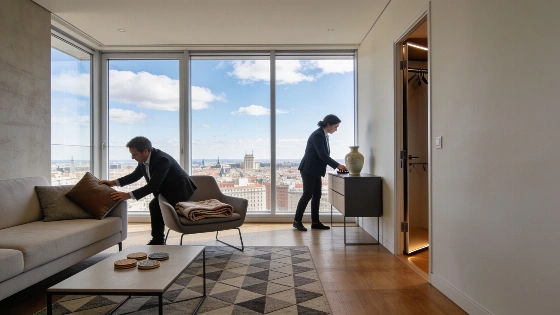
The Chamberí apartment where Alberto González Amador and Isabel Díaz Ayuso have lived since 2023 is on the market for €1,790,000. The sale comes as proceedings against Amador, a businessman and Ayuso’s partner, have reached the oral-trial stage over alleged tax fraud. ElPlural reported the listing, which a source close to the Madrid president confirmed. The property is being marketed through the Gilmar real estate agency on Idealista.
The sixth-floor flat was acquired after the period in which the alleged fiscal offenses occurred. Prosecutors allege that invoices for services not actually performed were used to avoid approximately €350,000 in taxes; the court has yet to determine the allegations. It is not Amador’s only property in the area: at the end of last year, he also bought the penthouse directly above. The timing of the sale has drawn attention, particularly after the Madrid regional government, led by Ayuso, bought a luxury penthouse elsewhere in Chamberí earlier this year. The public company Planifica Madrid acquired the 481-square-metre property for €6.3 million. It was initially presented as temporary office space for the president during work at the Real Casa de Correos, the regional government’s headquarters.
The government’s purchase of the penthouse sparked public debate over the use of public funds, including the debate surrounding the Madrid government’s acquisition of a luxury penthouse for office use. After criticism, the administration announced that the property would be sold, with the proceeds intended for reconstruction following fires in Madrid’s Sierra Oeste. Two sale attempts reportedly failed to attract a buyer. The second tender set a minimum price of €6,694,201 before taxes. The property was left on the market indefinitely unless Planifica Madrid withdraws it.
The administration later said Ayuso’s complementary office would be at the Canal de Isabel II headquarters on Calle de Santa Engracia 125, rather than in the penthouse. Regional government spokesperson Miguel Ángel García Martín said the administration had “found that office as a complement” and that the penthouse “is for sale and is no longer an alternative for that occasional office.” Officials described work at the Real Casa de Correos as ongoing maintenance that could sometimes make activity there difficult.
Sources close to Ayuso say she was not informed about Amador’s private real estate transaction and stress that it is unrelated to the government’s property dealings. They maintain that the administration was seeking an office, not a residence, and that the timeline for vacating the Real Casa de Correos headquarters does not coincide with Amador’s sale.
The apartment sale and the public property transaction are separate matters. The tax-fraud proceedings are also distinct from another investigation into alleged corruption in business dealings: the Madrid Provincial Court has ordered the Guardia Civil’s Unidad Central Operativa to broaden that inquiry beyond previously authorized checks of banking information, adding tax information and records from the Tesorería General de la Seguridad Social. That investigative measure is not a conviction or a finding of liability. The overlap between private and public real estate activity in Chamberí has fueled scrutiny, while the court has yet to decide the tax case.