Isabel Díaz Ayuso's regional government will ask a Madrid court to order the immediate removal of the Puerta del Sol camp, saying Government delegate Francisco Martín failed to act.
At Thursday's plenary session of the Assembly of Madrid, Isabel Díaz Ayuso said her regional government would take the Puerta del Sol encampment to Madrid's administrative court. It will seek urgent interim measures that could force the camp's immediate removal.
Ayuso said the application would be submitted that morning. She blamed Government delegate Francisco Martín for inaction, arguing that the Delegation of the Government should never have authorised the settlement.
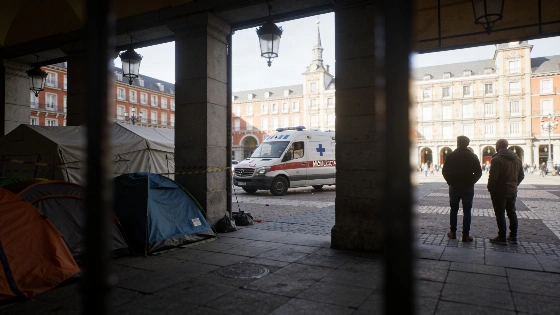
Bernama reported that around 300 people stayed at the Puerta del Sol camp on its first night. Later reports put the mobilisation at hundreds of participants, with more people still arriving.
The dispute centres on access through one of the capital's busiest areas. Ayuso said normal movement and safety must return to the square. Citing complaints from businesses, she said the area should be cleared enough for ambulances to pass.
Families with pushchairs and traders have also contacted the regional government about problems in their daily lives around the camp.
The court request is not an eviction order already in force. Ayuso's government is seeking urgent interim action, asking a judge to order the encampment's dissolution.
The Sindicato de Inquilinas promoted the camp, which has become the focus of a political fight between the regional administration and the Government delegation in Madrid. An earlier report covered the campaign surrounding the related housing case.
Bernama and other outlets linked the protest to demands for stronger tenant protections and measures against evictions. The mobilisation was also tied to the case of Maricarmen, an older wheelchair user evicted from her home in central Madrid. The Sindicato de Inquilinas has called for a so-called decreto Maricarmen, as well as broader renter protections and action against evictions.
Ayuso's announcement confirms a threat made two days earlier by Miguel Ángel García, the regional councillor for the Presidency, Justice and Local Administration. García warned that the Autonomous Community would go to court if Martín did not order the settlement's removal.
The deadline has produced a formal legal step rather than an administrative agreement. The regional government is asking the Tribunal Contencioso-Administrativo to intervene, saying the Government delegate failed to act. The court is now the next arena in a dispute over access to the square and nearby businesses.
Francisco Martín has taken a different view. As El País reported, he said the protest was peaceful. He argued police had no grounds to intervene beyond protecting public safety, as there had been no public-order violations.
Police unions have criticised that position. The legal group Manos Limpias has also announced plans to pursue a case against Martín.
Ayuso's government has opted for litigation and says responsibility for the camp's continued presence rests with Martín and the Delegation of the Government. The application neither settles the dispute nor guarantees an immediate clearance. It gives the regional executive a way to ask the courts to order the action it says the central administration has not taken.
For Puerta del Sol residents and businesses, as well as emergency services and passersby, the practical question is whether access will return. For the institutions involved, the case tests how far one administration can use the courts to compel another to act in a public-space dispute.
Ayuso has framed the confrontation around public safety and movement, along with the square's daily operation. The encampment has shifted from a street-level protest into a formal institutional conflict. The court must now decide whether the requested urgent measure is justified.