More than 350 people have camped in Madrid's Puerta del Sol over Maricarmen's housing case. Urbagestión says it offered her a discounted purchase and accuses the Sindicato de Inquilinas of turning the dispute into a national campaign.
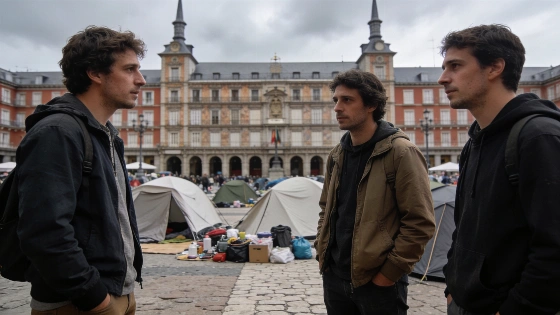
The flat had an old rent contract when Urbagestión bought it in 2018. The company says Maricarmen did not qualify to have the tenancy transferred into her name. More than 350 people have now spent two days camping in Madrid's Puerta del Sol. They say they will stay until the Government approves the housing decree expected on Tuesday.
Ricardo Alonso, the owner of Urbagestión, has presented the company's account of the legal conflict and the offer made to the tenant.
Alonso says the case took its current legal form in 2018. Urbagestión says it soon understood that Maricarmen did not meet the requirements for the tenancy to pass into her name. The company argues that she had occupied the home since 2007 without a valid legal title. Her mother died in 2005, and the transfer followed that death.
Urbagestión Desarrollo e Inversión S.L., also referred to in some reports as Urbagesa, was established in 2005. Ricardo Alonso Fernández and Fernando Alonso Fuentes have been identified in Spanish reporting as the company’s administrators since its creation.
Urbagestión's position is that Maricarmen could have held the property in her name for two years under the applicable rules. The company says it bought the flat knowing that it had an old rent contract. It says there was no valid title covering her continued occupation. That is the dispute.
BBC Mundo and El País have described the case as a fight over a renta antigua contract and successive transfers of the tenancy. Their reports also place Maricarmen's residence in the flat as far back as 1956. The purchase by Urbagestión took place in 2018.
The public campaign has pushed the case onto the national stage. Urbagestión says it did not expect the size of the mobilisation. Alonso claims that the Sindicato wanted to make Maricarmen a symbol because her situation made her a particularly vulnerable figure for its campaign. The company says early attempts at a settlement gave way to distrust and personal attacks.
The conflict widened.
According to RTVE, after the eviction Urbagestión sent Madrid City Council proposals intended to address Maricarmen’s housing situation. The council considered one of the company’s initiatives unworkable but said it was prepared to mediate a further negotiation.
Urbagestión has also reported alleged technical interference. Its representatives say they discovered hacking attempts and problems with their telephones. The company is trying to establish the extent of the alleged damage. It also wants to assess the pressure and coercion it says it faced.
Alonso told Susanna Griso that the company had dealt mainly with Maricarmen's lawyer before the dispute became more personal. He says Urbagestión was ready to reach an agreement that would allow Maricarmen to remain in her home. He says the company still wants a solution.
Urbagestión has asked Madrid City Council to intervene as a nearby administration and act as mediator. In later public statements, Alonso said the parties might have reached a simpler agreement without the intervention of the Sindicato de Inquilinas.
The financial details sit at the centre of the competing accounts. Urbagestión says Maricarmen paid 204 euros for ten years, plus community charges. The total monthly cost reached 450 euros. The company says the market value was 2,500 euros at the time. It says it offered her a discount of at least 40% in writing.
The details matter.
Other Spanish reports have referred to monthly payments of around 500 euros and to much higher proposed conditions. Urbagestión has disputed some of those figures. The proposed purchase price became another point of confrontation.
The company says the Sindicato presented the price on social media as 2,600 euros. Urbagestión disputes that figure. The wider mobilisation had already been described in an earlier report on the camp and its demand for indefinite rental protection.
The case now joins a narrow legal dispute to a wider political demand over housing. Urbagestión points to the absence of a valid title and to its written purchase proposal. The other side has put Maricarmen's personal circumstances at the centre of a campaign directed at the Government.
Spanish media report that the courts ultimately backed the owner's position. The eviction followed a lengthy legal dispute. Madrid City Council has been mentioned as a possible mediator, and the available account points to a documented negotiation as the clearest route.
The facts presented by Urbagestión do not settle the underlying dispute. They do show why the case cannot be reduced to a simple story about an eviction or a private contract. The conflict involves legal status and money, as well as the use of one tenant's situation as a national housing symbol. As elDiario.es has reported, the case has also raised questions about investors who acquire properties with long-standing rental arrangements.