José María Aznar reignites debate on Spain's memory laws, questioning the recognition of Franco-era victims. His remarks at the Senate draw sharp lines between victims of ETA and those of the dictatorship.
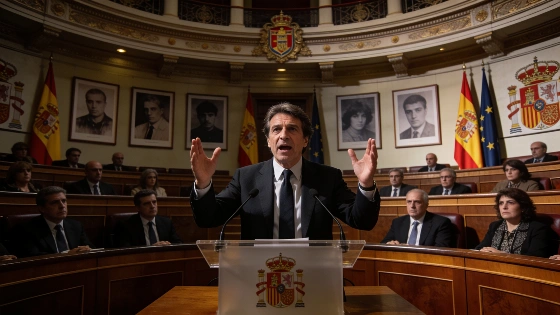
Former Prime Minister José María Aznar (PP) reignited a heated debate in Spain’s Senate by drawing a sharp distinction between victims of ETA terrorism and those persecuted under Franco’s regime. Speaking at a ceremony honoring those killed by ETA, Aznar argued that the “referential victims” are those of terrorism, claiming they did not fall representing any side, but rather the freedom of all. His comments came as he criticized Spain’s memory law, which he has previously described as a measure “negotiated with terrorists” and designed to “open graves here and there.”
Aznar’s intervention comes amid ongoing disputes over how Spain recognizes and compensates victims of its violent past. He insisted that the suffering caused by ETA cannot be equated with the divisions of the Civil War, stating that analogies between the two are “anachronistic” and serve only to distort history. According to Aznar, the Civil War split Spain in two, while ETA’s violence targeted a consolidated democracy. This position, however, overlooks the fact that many Franco-era victims defended the legal government of the time, a point highlighted by critics of his stance.
The controversy is not new. In 2022, Consuelo Ordóñez, president of the Colectivo de Víctimas del Terrorismo (Covite) and sister of assassinated PP leader Gregorio Ordóñez, publicly condemned attempts to pit victims of ETA against those of Francoism. She revealed that during parliamentary debates on the memory law, the PP convened a last-minute meeting with ETA victims, which she saw as an effort to create division. “Using one group of victims against another is a new low,” she told El País. Other associations attended the meeting, and the PP circulated images of the gathering during the legislative debate.
During his Senate speech, Aznar again referenced the memory law, which provides recognition and support for those repressed during the Civil War and dictatorship. He argued that the law should not be used to “rewrite history” or to “blur guilt” by treating all victims of past violence as a single group. He maintained that a balanced memory of the Civil War should abstract from the sides involved, focusing instead on delegitimizing the conflict itself.
In a previous interview, Aznar declined to condemn the 1936 coup, citing his father’s involvement in the war. He also repeated claims that the memory law was a concession to EH Bildu, despite its approval by a broad coalition including PSOE, Unidas Podemos, PNV, PDeCAT, Más País, Compromís, and the Basque group. The PP has argued that a provision in the law, which created a commission to study human rights violations from 1978 to 1983, was intended to whitewash ETA and reclassify victims of the GAL as Franco-era victims. However, the commission’s final report explicitly excluded deaths of individuals involved in terrorist organizations or those killed while handling explosives or weapons for illicit purposes.
The report did note cases where individuals mistakenly identified as ETA members died under torture by the Guardia Civil, and some commission members advocated for recognition of GAL victims. Aznar also accused the government of undermining the anti-terror pact by making concessions to EH Bildu, whom the PP often equates with ETA, and of negotiating with convicted ETA members. Yet, during Aznar’s own tenure as prime minister, his government authorized contacts with ETA’s political environment and facilitated the transfer of ETA prisoners closer to the Basque Country, a practice that continued under Mariano Rajoy.
This debate over the hierarchy of victims and the scope of Spain’s memory laws reflects broader tensions in Spanish society about how to address the legacy of dictatorship and terrorism. The issue of public recognition and legal support for different groups of victims remains contentious, as seen in other high-profile disputes over historical memory and justice. For example, public controversies around punishment and reconciliation have also surfaced in cultural contexts, such as the recent events in the valley chronicled in coverage of community conflicts in Valle Salvaje.
Spain’s memory law, officially known as the Ley de Memoria Democrática, was enacted to recognize and compensate those who suffered repression during the Civil War and Franco’s dictatorship. Separate legislation already exists for victims of terrorism, both at the national and regional levels. The ongoing debate underscores the challenges Spain faces in reconciling its complex history, balancing the need for justice with the risk of deepening old divisions.