Marga Prohens is urging Pedro Sánchez to explain why the Balearic government was not informed about a police report warning of a high risk of mass irregular migrant arrivals. The call comes after the issue was raised in Congress, fueling questions about government transparency.
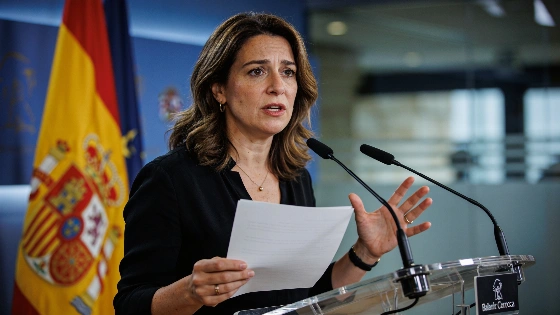
Marga Prohens, president of the Balearic Islands, has publicly pressed Pedro Sánchez for answers after a recent session in Congress revealed the region faces a high risk of mass irregular migrant arrivals. Prohens says the central government never shared this warning with her, exposing new tensions between Palma and Madrid. She is now demanding full transparency on security assessments and border control plans.
The dispute began when Sánchez, speaking in Parliament about the Ceuta crisis, mentioned a National Police report that flagged a "high risk" of maritime arrivals not only to the mainland but also to the Balearic Islands. This contradicted what Prohens says she was told in July, when she was assured that irregular migration to the islands was declining. According to Mallorca.com and other national outlets, the existence of this police warning has become a flashpoint, with Prohens insisting her government was left in the dark despite the elevated risk.
From January to August 2026, the Balearic Islands registered 4,934 migrants arriving on 261 small boats from North Africa, with only a slight increase compared to the same period last year.
“Why has this information been withheld from us?” Prohens asked at a press conference, calling the situation serious and criticizing Madrid for a lack of institutional loyalty. She has since sent a formal letter to Sánchez, asking for the full risk assessment and details on any preventive steps, including whether Frontex or extra security forces will be deployed. As reported by Última Hora and La Vanguardia, Prohens is demanding not just better communication but also concrete action to prepare for possible arrivals.
This is not the only criticism the central government has faced in recent days. Figures like Miguel Tellado have targeted Defence Minister Margarita Robles for her silence on the release of security reports, as previously reported. The focus has shifted from Ceuta to the Balearics, increasing scrutiny of how Sánchez is handling migration risks along Spain’s southern borders. The Center for National Immigration and Borders (CENIF) issued a warning on July 29 about a "high" or "extreme" risk of mass maritime and coordinated land entries into Ceuta, with the scenario also including possible arrivals by sea, according to El Independiente and EFE.
Prohens has also taken her concerns to social media, warning that ignoring the threat of mass arrivals would be a “grave irresponsibility.” She argues that the Balearic Islands, as Spain and Europe’s southern frontier, cannot be left unprotected. She points out that the information in question came directly from the Prime Minister in Parliament, not from media leaks or activist groups.
Investigative reports indicate that the police warning in late July was not limited to Ceuta but also included Melilla, highlighting a broader geographic scope of the potential risk of irregular entries. This detail, confirmed by El Independiente and EFE, expands the context of the current political dispute beyond just the Balearic Islands.
At issue is not only whether the Balearic authorities are prepared, but also whether the central government is communicating honestly with regional leaders. The controversy has reignited debate over Spain’s border controls and the transparency of risk reporting. While the government says the Ceuta crisis is under control, the lack of clear, timely information to regional partners like Prohens has undermined confidence in Madrid’s approach. With migration pressures ongoing along Spain’s southern coasts, the episode highlights a pattern of reactive crisis management from the central government. The Balearic government’s demand for answers is not just political—it is a call for accountability in a region on the frontline of Europe’s migration challenges.