Miguel Tellado called Margarita Robles "cynical" after she declined to applaud Sánchez’s decision to release security reports on Ceuta. The PP steps up its criticism of the government’s handling of the crisis.
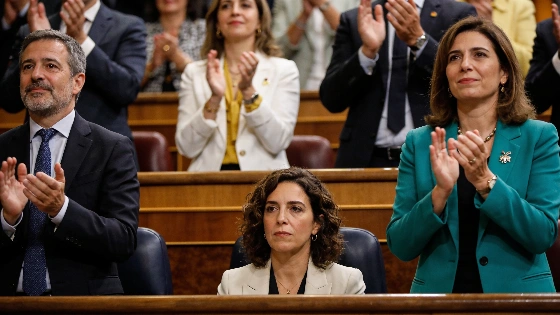
Defence Minister Margarita Robles’s decision to remain seated and not applaud Pedro Sánchez’s announcement on Ceuta has sparked a new round of political tension. Miguel Tellado, secretary general of the Partido Popular, publicly criticized Robles, calling her "cynical" and accusing her of betraying her own judicial principles by staying in Sánchez’s cabinet.
Tellado went further, tying Robles directly to the government’s response to the Ceuta migration crisis. He argued that her refusal to join the applause did not excuse her from responsibility. According to Tellado, Robles’s silence and discomfort during the president’s announcement—while the rest of the ministers stood together—only made her complicity more obvious. He said that "pulling faces and clapping half-heartedly" would not protect her from being held accountable, and instead, it exposed her as a "cynic" within the government.
On September 3, 2026, Pedro Sánchez told Congress that the government would publish a dossier with all documents related to the Ceuta crisis, including reports and communications from the CNI and security forces up to July 30.
The controversy began after Sánchez announced that all intelligence and security reports before the mass entry into Ceuta would be made public. While most of the cabinet applauded, Robles looked away and did not join in. Cameras caught her reaction, and the footage quickly spread, fueling talk of divisions within the government.
Robles later told reporters she is proud to serve as Defence Minister and to lead the Armed Forces, a role she has held since 2018. She defended her right to express herself through gestures and said her loyalty to the government was not in doubt. Tellado, however, repeated his criticism, describing her as "a judge who betrayed herself" and accusing her of losing political dignity.
This dispute comes as the PP increases its criticism of the government’s handling of the crisis. Days earlier, party leader Alberto Núñez Feijóo had called for urgent action and rallied public support, as reported earlier. By focusing on Robles, the PP is now targeting individual ministers as well as the prime minister, aiming to increase pressure and highlight possible divisions within the cabinet.
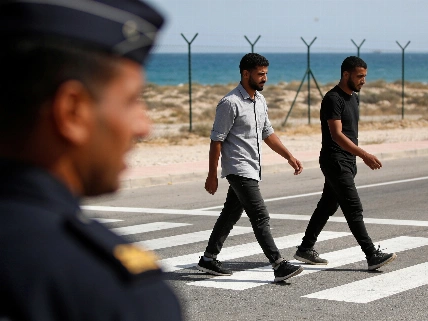
According to official police materials, the mass entry of over 70,000 migrants into Ceuta on July 30–31 was described as "planned" rather than spontaneous. The government’s decision to publish approximately ten key documents still required approval from the Council of Ministers at the time of Sánchez’s announcement.
Robles’s background as a judge and her reputation for independence once set her apart in Spanish politics. Now, Tellado’s accusations aim to portray her as a loyalist who has given up principle for position. The government’s plan to release security reports on Ceuta was meant to show transparency, but the scene in Congress has instead drawn attention to internal strains. In this climate, gestures are closely watched, and Robles’s refusal to applaud has become a symbol of unease within Sánchez’s team. The PP’s strategy is to use these moments to challenge the government’s image of unity and hold every member of the executive, not just the prime minister, responsible for the Ceuta crisis.