Alberto Núñez Feijóo accused the government of failing Ceuta and announced three urgent measures. The PP leader urged voters to back his party in what he calls a decisive year for political change.
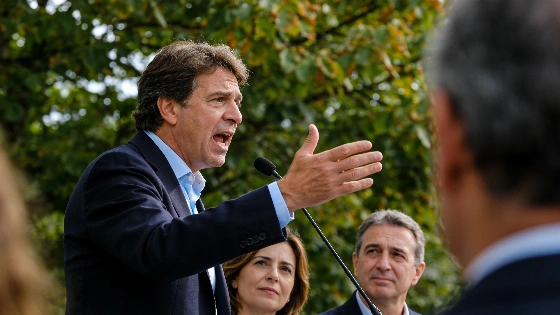
Alberto Núñez Feijóo, president of the Partido Popular (PP), used the opening of the political season in Cotobade, Pontevedra, to sharply criticize Pedro Sánchez’s government for its handling of the Ceuta crisis. Speaking before local supporters, Feijóo outlined three immediate steps the PP will take in response to what he described as government inaction and neglect of Ceuta’s interests.
The first measure is a nationwide rally on September 2, with gatherings planned in every municipality to demonstrate solidarity with Ceuta. Feijóo confirmed his personal attendance at the main event in Ceuta that evening, emphasizing that the city is as much a part of Spain as any other region. The second step involves summoning Esperanza Casteleiro, director of the National Intelligence Centre, to the Senate, where the PP holds a majority, to provide a full account of the situation. The third action is the PP’s formal participation in the ongoing legal proceedings at the Audiencia Nacional, aiming to hold those responsible for Ceuta’s abandonment accountable in court.
Feijóo’s speech, delivered in the symbolic Carballeira de San Xusto, marked the start of what he called “the year of change in government.” Local officials, including mayor Jorge Cubela, provincial president Luis López, and Galicia’s regional president Alfonso Rueda, expressed confidence that Feijóo would return next year as Spain’s prime minister. The PP leader divided his address into two main themes: the Ceuta crisis and the upcoming elections, repeatedly blaming Sánchez and his administration for failing to act across a range of issues, from wildfires and medical strikes to inflation and infrastructure problems.
He argued that the events in Ceuta are symptomatic of a government in collapse, contrasting the actions of Ceuta’s president Juan Jesús Vivas—whom he praised for stepping up during the crisis—with what he described as the central government’s absence. Feijóo did not address recent violent incidents or Morocco’s role in the conflict, focusing instead on the need for accountability and decisive leadership. He called on voters to give the PP a clear mandate in the next general elections, insisting that only a strong result would prevent those who lost from governing.
Feijóo’s remarks come after a week of intense debate in Congress, with the final session scheduled for Thursday featuring Sánchez himself. The PP’s evolving stance on the crisis, including its recent condemnation of violence in Ceuta, was highlighted in a recent report on the party’s call for calm. Feijóo positioned himself as ready to “rebuild Spain,” urging a massive turnout to ensure the end of “sanchismo” at the ballot box. He stressed that he would not avoid problems or offer empty promises, but instead provide honest leadership focused on real change.
For context, Ceuta is a Spanish autonomous city on the North African coast, often at the center of migration and border security debates. The current crisis has reignited national discussions about Spain’s territorial integrity and the government’s crisis management. The PP’s actions and rhetoric signal a strategic push to capitalize on public dissatisfaction ahead of both local and general elections, with Feijóo seeking to channel both frustration and hope into electoral momentum.