Barcelona will install 660 surveillance cameras by 2027. New locations include El Born, Carmel bunkers and Pegaso Park. The city aims to curb crime and boost public safety in high-risk zones.
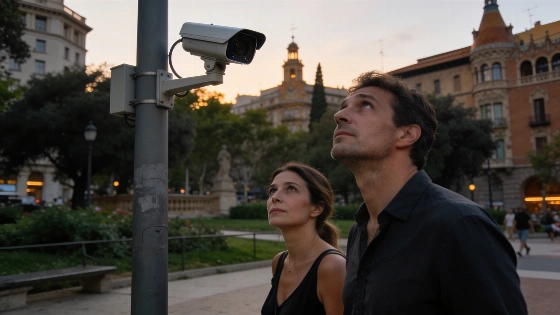
Barcelona is set to dramatically increase its video surveillance network, with the city council confirming plans to install a total of 660 cameras by 2027. The expansion targets areas with high visitor numbers and locations flagged for criminal activity or potential security threats. Among the new sites are the Carmel bunkers, the Anella Olímpica, and Pegaso Park, where a teenager was killed in a shooting earlier this July.
The city’s security chief, Albert Batlle, detailed the next phases of the rollout after receiving the necessary authorizations. The upcoming installations will see nine cameras on Passeig del Born, eleven at the Carmel bunkers, thirty at the Anella Olímpica, nineteen in Pegaso Park, and another thirty split between Fira de Bellcaire and Fort Pienc. Batlle emphasized that the request to install cameras in Pegaso Park predated the recent fatal shooting, citing ongoing police reports of criminal incidents in the area.
Further approvals have been secured from the Catalan Commission for the Control of Video Surveillance Devices to place cameras in additional locations, including Guineueta Park, Plaça Àngel Pestaña, Plaça Roja in Nou Barris, and Plaça Universitat in Eixample. These projects are awaiting final clearance from the regional security administration, with installation expected before 2027.
The new deployments build on the first phase of the city’s surveillance plan, which has already seen 26 cameras activated in Plaça Catalunya and the Front Marítim since last October. Six more are being installed on Avinguda de la Catedral, and work has begun to add 20 cameras to Plaça Reial. The city hall itself will undergo a full upgrade of its surveillance system, replacing 30 existing cameras, while 21 new devices are planned for Rambla del Raval, with civil works scheduled for September. As of now, Barcelona operates 186 active cameras across public spaces.
Officials stress that the new cameras will not use facial recognition or artificial intelligence-based identification. Batlle responded to criticism by noting that surveillance will cover just over 5% of the city’s public space. He explained that camera locations are chosen based on crime analysis, vulnerability, serious public order issues, and the risk of terrorist targeting. The dual purpose of the system is to deter crime and assist investigations by providing evidence when serious incidents occur.
All public camera installations require authorization from the Generalitat and must comply with principles of necessity, proportionality, and minimal intrusion into privacy. The surveillance expansion is part of a broader security strategy that includes increasing the Guardia Urbana’s presence, a visibility plan for more police on the streets, a special office to tackle repeat offenders, the Druida Plan against public drug use and trafficking, and a new ordinance on public order.
Barcelona’s approach to surveillance remains more restrained than other European cities, with Madrid operating over a thousand cameras and Nice reportedly using 3,500. The city’s focus on targeted, authorized deployments reflects ongoing debates about privacy and security in urban environments. For context, recent large-scale public events in Spain, such as the total solar eclipse, have also prompted authorities to review emergency and safety measures, as seen in coverage of the eclipse’s impact on travel and public order.
Spain’s legal framework requires that any expansion of public surveillance be justified by clear security needs and subject to oversight. The city’s gradual rollout and focus on high-risk areas suggest a cautious balance between public safety and civil liberties. As the 2027 target approaches, Barcelona’s evolving security infrastructure will likely remain a point of public and political discussion.