The autopsy places Josep Juanpere's death between 15.00 and 21.00 on 26 December. Belén López says she did not realise he had stopped breathing, while a judge examines neck injuries and the lack of an emergency call.
The autopsy places Josep Juanpere's death between 15.00 and 21.00 on 26 December. By about 21.00, emergency teams and relatives had reached the apartment in Vielha. Belén López told the Mossos d'Esquadra that she did not realise Juanpere had died, though she may have been beside his body for several hours.
She said she was lying beside him, embracing him. During that time, she did not call 112 or alert his relatives. Cadena SER reported that López was arrested in Madrid and is currently the only person under investigation in the case.
The judge is examining two possibilities: pressure on Juanpere's neck may have caused fatal injuries, or he may have suffered a heart attack and received no help.
Information from her statement, the architect had suffered acute gastroenteritis since Christmas Eve. He felt unwell again during the afternoon of 26 December. López said she stayed with him in the bedroom throughout the afternoon, then remembered nothing until emergency services arrived.
She told investigators that she saw no change in his breathing or spasms, and no other sign that Juanpere was dying or had already died.
Four days later, on 30 December, López travelled from Madrid to attend Juanpere's funeral. She was summoned to the Mossos station in Vielha, where her account was recorded as part of the investigation. Later, in court, she was questioned about the death. She said only that she had not been involved. El País reported that the investigation involved Mossos d’Esquadra, the police and the Guardia Civil. Investigators searched López’s homes in Madrid and Málaga, and seized telephones for examination.
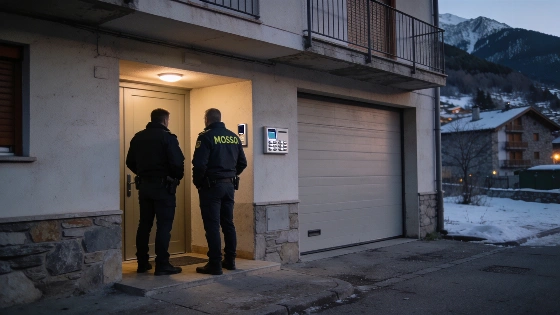
Juanpere's nephew opened the apartment on the night of 26 December. He had been unable to speak with his uncle for 24 hours. With the help of an X-ray, he entered after López had locked the door from inside.
The nephew told investigators that he found Juanpere in the bedroom, with López beside him. He described her as aggressive and said she did not want him to enter the room.
Forensic doctors found injuries on Juanpere's neck that could have been fatal. The initial autopsy pointed to heart failure. Later forensic conclusions reportedly found injuries compatible with external force.
EL PERIÓDICO reported that the available evidence has not established what caused the death. Juanpere may have died from those injuries, or he may have suffered a heart attack in López's presence. The judge in Vielha is investigating the case as a homicide, with both possibilities still open.
Information from El País, the judge has also described the relationship between Juanpere and López as tense. That assessment, along with the neck injuries, the locked door and the missing call to 112, forms part of the reasoning behind the continued homicide investigation.
These circumstances do not establish how Juanpere died or show whether López caused his death.
The Mossos are analysing the mobile phones belonging to Juanpere and López. Investigators are also checking whether anyone else was inside the apartment on 26 December. López remains free after posting bail of 80,000 euros.
An earlier Madrid homicide investigation involving an elderly couple was a different case. It shows why the circumstances of a death can remain under judicial scrutiny when the first account is disputed. The case was covered in this earlier report.
The unanswered question is what happened during the period identified by the autopsy. López's statement places her beside Juanpere for much of that time, while the nephew's account describes a locked apartment and his resistance to entering the bedroom.
The phone analysis and forensic evidence may clarify those points. The neck injuries and lack of an emergency call, alongside uncertainty over whether help could have changed the outcome, explain why the homicide investigation continues.