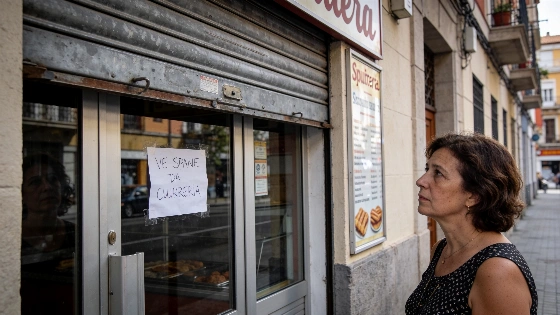
On July 19, 2026, the shutters came down for the last time at La Xurrería L’Àvia, a small but cherished churrería on passatge Blanchart in L’Hospitalet de Llobregat. Juan Carlos and Manolo opened the family business in June 1996. It became part of local residents’ daily lives, drawing regulars for churros and homemade snacks such as potato chips and cortezas for three decades.
La Xurrería L’Àvia was more than a place to buy breakfast. For many, it was woven into family weekends and post-festival mornings, when neighbors gathered. The shop’s reputation rested on its products and the personal touch of its owners. They greeted generations of customers by name and remembered their usual orders. Families who first visited in the 1990s returned over the years with their children and grandchildren, keeping the tradition alive.
End of an Era
The decision to close came as Juan Carlos, who had run the business alongside Manolo for most of its history, reached retirement age. Manolo stepped back in 2024, leaving Juan Carlos and his daughter Andrea to continue serving the community. They worked to maintain the same quality and warmth, but eventually the time came to say goodbye. The closure reflects a wider succession challenge facing family businesses in Spain. Figures attributed to the Instituto de la Empresa Familiar’s report La Empresa Familiar en España 2025 put family firms at 92.4% of Spanish companies. They account for 70.6% of private-sector employment and 57.8% of private-sector gross value added. The same figures indicate that about one in three family firms has completed a generational handover, while roughly one in ten has reached a third generation. These national figures offer context for succession pressures, but do not establish why this shop closed.
The challenge also comes up in proximity retail. At a press conference during the 41st AECOC Congress on Consumer Goods in Seville, Covirán director general Esteban Gutiérrez said that “many supermarket owners reach retirement without finding someone willing to continue the business.” The broader issue can involve finding a successor and whether a shop remains economically viable.
As reported by Talent24h, regulars streamed in on the final day. Some stopped for one last order of churros; others came to thank the family for years of service. Many remembered weekend-morning lines and the familiar faces behind the counter.
Community Memories
La Xurrería L’Àvia’s story is not unique. Across Spain, the closure of small, family-run shops often signals the end of a local era. In L’Hospitalet, the churrería’s departure follows the recent closure of other traditional businesses, including a shoe and basic repair shop that shut its doors after 36 years. These changes reflect shifting habits and the challenge of sustaining small enterprises in a changing urban field.
Regional comparisons show how succession can affect small businesses beyond Catalonia. In a 2024 survey by Ceder Somontano, 58% of 48 non-agricultural business owners over 55 said they had no successor. The findings relate to Somontano in Aragón, not L’Hospitalet, but illustrate the succession pressures facing owner-operated businesses elsewhere in Spain.
For many, the memories linger: grandparents sharing churros with grandchildren and neighbors catching up over coffee. Others remember the comforting routine of stopping by before the midday vermut. The shop remained a constant through decades of change in the neighborhood, offering a sense of continuity and belonging.
Tributes and Farewell
The closure prompted heartfelt tributes on social media. Manuel Roldán, writing on Instagram and later quoted by TOT L’Hospitalet, thanked Juan Carlos, Manolo and Andrea for their dedication and the countless hours spent behind the counter. His words captured the sentiment of many: La Xurrería L’Àvia was a meeting point where local memories and community spirit took root.
Similar stories have played out elsewhere, including in Minnesota, where a 90-year-old resident’s campaign led to changes in care home regulations, as detailed in this report on tradition and change in community life. In both cases, the end of a familiar routine marks a turning point for those who relied on these places for connection and comfort.
With La Xurrería L’Àvia’s closure, L’Hospitalet loses a piece of its collective memory. The family leaves behind a legacy of simple pleasures and shared moments, reflecting the value small businesses bring to the heart of Spanish neighborhoods.