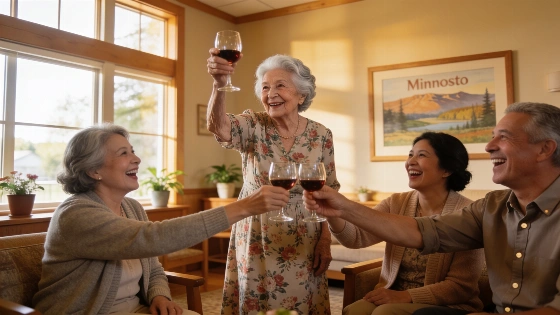
Anita LeBrun, 90, refused to give up the tradition of sharing a drink after moving into assisted living. Her campaign led Minnesota to relax alcohol rules for care homes, allowing residents and guests to toast together under new safeguards. The law marks a shift in how autonomy is valued in later life.
When Anita LeBrun moved into Amira Choice, an assisted living facility in Champlin, Minnesota, she was not prepared to let go of a simple pleasure: raising a glass with friends and family at the end of the day. At 90, LeBrun found herself at the center of a legal battle over whether care home residents could enjoy a drink together without the burden of commercial alcohol licenses.
The issue surfaced when Amira Choice tried to organize a social event with wine, only to discover that state law required a commercial license—something the facility could not obtain for such gatherings. The absence of a suitable permit left residents unable to continue a tradition that, for many, symbolized connection and independence.
From Protest to Policy
LeBrun took her case to the Minnesota Legislature, arguing before the Commerce Committee that moving into a care home should not mean surrendering basic freedoms. "Living in a residence doesn't mean we should have fewer rights than anyone else," she told lawmakers. Her testimony, which highlighted how these gatherings helped residents remember loved ones and celebrate their "golden years," became the driving force behind a new legislative proposal.
The result was the "Grandparents’ Happy Hour" provision, which carved out a specific exception in Minnesota's alcohol laws for senior residences and assisted living centers. The measure, first introduced as HF4145 and later incorporated into SF2511/HF2027, passed the House by 129 to 1 on April 13, 2026, and the Senate by 56 to 10 the following day. Governor Tim Walz signed it into law on April 21, making it Chapter 48 of the 2026 state statutes.
What the New Law Allows
Under the new rules, care homes, assisted living facilities, and similar establishments are no longer required to obtain a commercial license to serve alcohol at certain events. Instead, they must notify the state commissioner of their intent and maintain a valid health license. Alcohol can only be served to residents and their guests, with the stipulation that guests remain physically accompanied by a resident throughout the event. Gatherings must be primarily for residents and take place on the facility's property.
Importantly, the law prohibits the sale of alcohol or any exchange for money or services. The reform does not turn care homes into bars or guarantee daily drinks; it simply allows for occasional, supervised events where residents and their guests can share a toast.
Safeguards and Oversight
Facilities remain subject to state inspections and all other alcohol regulations. Authorities can intervene if alcohol is served to visibly intoxicated individuals, minors gain access, or storage is unsafe. The state retains the power to suspend service, require staff training, or demand corrective action if violations occur.
Governor Walz marked the law's passage with a ceremonial signing at Amira Choice Champlin on July 14, 2026, joined by residents, staff, lawmakers, and LeBrun herself. "Growing older shouldn't mean giving up the traditions and freedoms of a lifetime," Walz said. For LeBrun, the reform was a toast to independence and dignity in later life.
Changing Attitudes on Aging
LeBrun's campaign began with a glass of wine but ended up challenging assumptions about autonomy and aging. By securing the right for residents to share a drink in their own home, she helped shift the conversation about what it means to age with agency. The story echoes broader debates about personal choice and institutional rules, much like the pressures young people face when making life-changing decisions, as explored in this analysis of university choices in Spain.
While the new law does not mandate happy hour or guarantee daily drinks, it restores a measure of normalcy and respect for personal traditions—reminding policymakers that age alone should not limit the right to celebrate life’s moments, large or small.