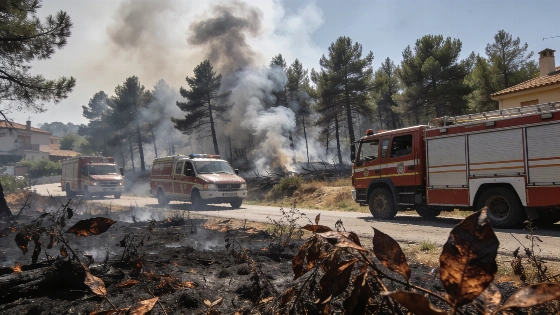
A wildfire broke out Sunday in the Ermita del Rosario area of Benahavís, prompting officials to order everyone in town to stay indoors and evacuate the Montemayor Alto development. The fire started on 13 September at about 13:07 in the Ermita del Rosario zone, information from 112 Andalucía. Around 14:00, the Andalusian Interior Ministry activated the region’s level 1 fire emergency protocol. Antonio Sanz, the regional councillor for the presidency and interior, said the priority was protecting residents and ensuring they followed rescue instructions.
Authorities sent urgent ES-Alert messages telling people to stay inside masonry buildings, with doors and windows sealed. They were also told to avoid unnecessary risks. The La Coja urbanization was placed under strict confinement. The right lane of the basic A-7175 road was closed to give emergency vehicles clear access, disrupting traffic and daily routines. ABC Andalucía confirmed that the measures also applied to scattered homes north and west of the town.
Two helicopters and 23 forest firefighters took part in the initial response, EuroWeekly News reported. Two technicians joined them, along with an environmental agent. A water tanker was also deployed. Resources were quickly reinforced as the situation developed.
Within hours, the firefighting operation had expanded. At its peak, INFOCA deployed 15 aircraft, a sharp increase from the initial response. Technical teams joined the effort. Meteorological units came in, with a mobile command post supporting the operation. The expanded response reflected the challenges of tackling a fast-moving fire in mountainous terrain.
Two people have been injured so far: a civilian who suffered burns while trying to put out the flames, and a forest firefighter hurt in a fall. The fire’s speed and unpredictability left little room for error. Officials stressed the need to follow safety instructions. In the latest updates, firefighters were still working to contain the blaze.
Benahavís, a town of about 9,500 near Ronda, is accustomed to wildfire risk, but this response is larger than usual. The Andalusian Emergency Agency quickly deployed aerial and ground crews, showing how seriously authorities are treating the threat. The A-7175 closure has made it harder for locals to get around and added to the difficulties emergency teams face in this terrain. EuroWeekly News reported that smoke from the wildfire was visible across the entire Costa del Sol, prompting concerns about air quality and possible traffic effects, as well as respiratory risks for residents across the wider region.
Wildfires like this have become more common across Spain in recent years, forcing communities to deal with sudden evacuations and long-lasting disruptions. As previous cases have shown, the effects can linger, affecting insurance and infrastructure while eroding residents’ sense of security.
In Benahavís, regional authorities and emergency services acted quickly and in coordination. The rapid launch of the Plan Andaluz contra Incendios, together with the deployment of aerial and ground resources, reflects the level of preparedness now needed as wildfire risks grow. The incident shows that even well-equipped towns remain vulnerable and that residents need to follow official warnings. As Spain’s fire seasons grow longer and more intense, the Benahavís response could offer a model for other regions facing similar threats.