Thirty years after the Biescas camping flood that killed 87, the town avoids public commemoration. Survivors and locals still grapple with the trauma, while legal and safety changes shape the region.
Three decades after the catastrophic flood at Camping Las Nieves in Biescas, Huesca, the municipality has opted for discretion over remembrance. On August 7, 1996, a sudden and violent storm transformed a sunny day into one of Spain’s worst natural disasters, claiming 87 lives—27 of them children—and injuring more than 180. Despite the scale of the tragedy, the local council has decided not to organize any official acts to mark the anniversary, reflecting a community preference to look forward rather than relive painful memories.
The disaster unfolded when torrential rain overwhelmed the Arás ravine, sending a torrent of water and debris through the campsite, which was situated on a known floodplain at the mouth of the Gállego river. Survivors recall the chaos and narrow escapes. Ander Zubillaga, who was six at the time, returned to Biescas only recently, channeling his experience into a tribute song and video filmed on the now-empty grounds where the campsite’s bathrooms once stood. His family survived by sheltering in those very bathrooms, clinging to beams as the floodwaters surged.
Others were not as fortunate. Sergio, then 16, lost his entire family to the flood but survived after being trapped between tree branches. Now living in Pamplona with his own family, he speaks of resilience but acknowledges the lasting impact. The psychological toll was evident from the start, as Oscar Gracia of the Red Cross recalls: initial requests for blankets soon gave way to urgent needs for psychological support. The devastation shocked even seasoned responders, with scenes of destruction far exceeding early reports.
Journalists and emergency workers arriving at the scene described a landscape of devastation: vehicles and caravans scattered far from the campsite, survivors wandering in shock, and families desperately searching for missing loved ones. Local residents opened their homes to victims, while forensic teams faced the emotional strain of identifying the dead and reuniting families. The then-mayor, Luis Estaún, had only recently taken office and was confronted with a crisis of unprecedented scale, initially unaware of the full extent of the disaster as he inspected the town’s streets after the storm.
Investigations later revealed that the campsite had been built in a high-risk area, despite warnings from technical reports by organizations such as COMENA and the Instituto Pirenaico-CSIC. It was not until 2005, after nearly a decade of legal battles, that the Audiencia Nacional recognized the state and regional government’s liability, ordering compensation of over 11 million euros to victims’ families. The judicial process was long and painful, with some cases initially dismissed by local courts.
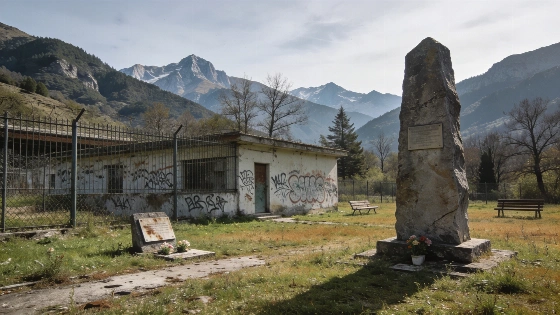
Today, the site of Camping Las Nieves bears little resemblance to its past. Only the central building remains, fenced off and marked by graffiti. A memorial park now occupies the area, with a monolith listing the names of the 87 victims—a quiet reminder of the lives lost. Emergency protocols and forecasting systems have since been strengthened, and regulations for tourist facilities in flood-prone areas are now far stricter.
The Biescas tragedy remains a reference point for disaster response and urban planning in Spain. Its legacy is visible not only in the landscape but also in the evolution of safety standards and mental health awareness. The decision not to hold public commemorations this year reflects the community’s ongoing struggle with grief and the desire to move forward, even as the memory of that day endures. The challenges of disaster response and the importance of preparedness have also been highlighted in other regions, such as León, where delays in emergency infrastructure have raised concerns about readiness for future crises.
For context, Spain has since implemented more rigorous risk assessments for campsites and tourist accommodations, particularly in mountainous and riverine areas. The Biescas flood prompted a national review of emergency planning, leading to improved coordination between local, regional, and national authorities. The event is now studied in civil protection courses as a case study in both the dangers of inadequate site selection and the necessity of rapid, coordinated response. While the scars remain, the lessons learned continue to shape policy and practice across the country.