Bizum Pay is now compatible with over 1.6 million payment terminals in Spain. Yet, most physical stores have not activated the service. Shoppers face delays as retailers hesitate to implement the new system.
Bizum Pay, the new contactless payment solution from Spanish banks, has reached technical compatibility with more than 1.6 million payment terminals nationwide. Despite this rapid infrastructure rollout, the service remains largely unavailable to shoppers in physical stores, as most retailers have yet to activate the option at checkout. This disconnect between technical readiness and real-world usage is now shaping the early months of Bizum Pay’s presence in Spain’s retail sector.
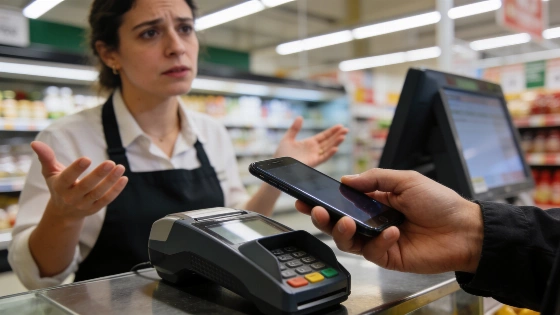
Since its official launch in May, Bizum Pay has been promoted as a step toward a European payment network capable of rivaling global giants. The dedicated Bizum Pay app, released in July for Android and iOS, was designed to make in-store payments as simple as tapping a phone. However, a survey of supermarkets, clothing chains, and hospitality venues in Madrid reveals that the vast majority still do not accept Bizum Pay. Staff at major outlets like Fnac and Primark confirm that the service is not yet available, with no clear timeline for activation. Similar responses were found in supermarkets such as DIA and Lidl, as well as in bars and cafés, where employees either had no information or stated outright that Bizum Pay was not supported.
Bizum highlights that over 85% of Spain’s banking terminal network is now technically compatible with its payment system. However, this figure excludes proprietary terminals used by large retailers, and compatibility does not guarantee that the service is enabled for customers. Merchants must request activation from their bank or technology provider, a step many have not yet taken. Bizum has not disclosed the number of in-store transactions or the total payment volume since launch, nor has it set public usage targets. The company maintains that initial feedback is positive and that expectations for the service remain high, but acknowledges that widespread adoption will require further collaboration with banks and merchants.
One of the main challenges for Bizum Pay is the entrenched payment habits of Spanish consumers. According to the latest Bank of Spain study, 57% of shoppers still prefer cash for in-person purchases, while 27% use cards and only 15% rely on mobile devices. Although mobile payments are growing, many consumers see little reason to switch from cards, and those who favor cash are slow to change established routines. While Bizum is a familiar brand for peer-to-peer transfers, convincing both retailers and customers to embrace it for in-store payments is proving more difficult. In many establishments, payment terminals display logos for Visa, Mastercard, and contactless solutions, but Bizum’s logo is rarely seen, and direct inquiries confirm that acceptance is far from universal.
This situation creates a classic chicken-and-egg dilemma: with few stores offering Bizum Pay, customers have little incentive to use it, and with low customer demand, retailers are slow to enable the service. The contrast with Bizum’s success in person-to-person transfers is striking. In 2025, over 30.6 million users completed 1.237 billion Bizum transactions, moving €67.7 billion. Online purchases with Bizum also surged, with an 82% increase in operations. The challenge now is to replicate this momentum at the physical point of sale.
As noted in a recent report on changing consumer trends in Spanish cities, the pace of adoption for new services often depends on both retailer readiness and customer willingness to try alternatives. For Bizum Pay, the next months will be critical in determining whether its strong brand recognition can translate into everyday use at the checkout counter.
For context, Spain’s payment landscape remains dominated by cash and cards, with mobile solutions gradually gaining ground. Bizum’s established presence in digital transfers gives it a unique advantage, but the lack of immediate availability in stores may slow its progress. The key metric—how many people actually use Bizum Pay for purchases and how much money is spent through the system—remains undisclosed. Until these figures emerge, the gap between technical deployment and practical adoption will continue to define Bizum Pay’s rollout in Spain.