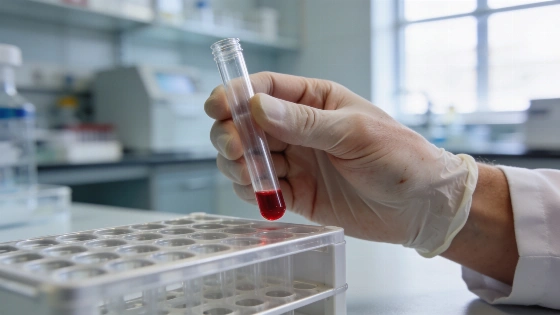
VHIO researchers found tumour neoantigens and responsive T cells in blood samples. The method could widen access to personalised immunotherapy when tumours are hard to biopsy.
The study involved six patients with metastatic melanoma, breast cancer, head and neck cancer and colorectal cancer. Researchers found tumour-specific neoantigens and T cells that could recognise them in blood samples. The work was led by Vall d’Hebron Instituto de Oncología (VHIO).
The result could help doctors design personalised immunotherapies without taking an invasive tissue sample in every case. That may matter when cancer has spread to several organs or when a tumour releases very little tissue.
The work was published in Cancer Discovery. It tested whether circulating tumour DNA and immune cells in peripheral blood could provide the two elements needed for this approach: mutations that create neoantigens and CD4+ or CD8+ T cells able to attack them.
Since 2006, Vall d’Hebron has developed one of Europe’s early clinical pathways for liquid biopsy, placing the study within a longer programme of translational cancer research.
Neoantigens are proteins made by cancer cells. Healthy tissue does not have them. That difference makes them useful targets for cancer vaccines and T-cell therapies because the immune response can focus on the tumour instead of normal cells.
The practical problem is tissue. Personalised treatments have usually depended on tumour samples. Some lesions are risky or difficult to biopsy. A single sample may also miss mutations found in other metastases.
Alena Gros and her team compared circulating tumour DNA with standard tissue analysis. In all six cases, the blood-based test detected between 63.25% and 97.4% of the neoantigens found through tissue testing.
A 2026 review published by Springer describes ctDNA as a minimally invasive, dynamic biomarker that can support molecular profiling, treatment stratification and monitoring of response or progression. That broader clinical role provides context for testing whether the same blood-based approach can help select personalised immunotherapies.
The blood test also found neoantigens that the tissue analysis had missed. That broader view could help patients with metastases in different organs. A liquid biopsy may capture targets shared across lesions and support T-cell treatments directed at more than one tumour site.
The result was not universal. In two additional patients with breast cancer and head and neck cancer, the researchers could not isolate circulating tumour DNA. Some tumours release only small amounts of DNA into the bloodstream.
Across the eight patients, blood samples from six contained T cells that recognised neoantigens identified through circulating DNA, tumour tissue, or both. That was a useful signal, but not a complete answer.
The researchers then studied 69 more patients with different metastatic solid tumours. Circulating tumour DNA appeared in 32 of them, or 46.4%. The figure suggests that blood-based neoantigen identification may be possible in roughly half of patients.
Colorectal cancer produced the strongest result in the reported group. Circulating tumour DNA was found in 14 of 17 patients, or 82.4%. The group included some patients whose tumours had deficient DNA mismatch repair. Miragenews reported these figures in its medical account of the VHIO study.
The findings fit a wider VHIO research effort on immune responses against cancer. The institute has also studied how treatment might act before early metastatic tumours become detectable, as described in this earlier cancer study. The two projects address different stages and mechanisms.
Vall d’Hebron says its translational model moves laboratory discoveries towards clinical use. Its liquid-biopsy programme has been running for years.
For clinicians, the possible benefit goes beyond avoiding an invasive procedure. Repeated blood samples could track changes in neoantigens and immune responses during treatment. They could also show how a tumour changes, whether treatment is working and when resistance develops.
Josep Tabernero of Hospital Universitario Vall d’Hebron and VHIO described the approach as promising for patients with difficult-to-biopsy tumours and metastases.
The evidence remains preliminary. The study included a small number of patients and did not cover every cancer type. Larger prospective cohorts must test the method's accuracy, reproducibility and ability to guide effective treatment in routine practice.
For now, the blood test is best viewed as a complementary tool and a possible alternative in selected cases. It is not a universal replacement for tissue analysis. The research brings personalised immunotherapy closer to a less invasive model. Clinical validation will decide whether it can enter standard cancer care.