Miguel Ángel Pérez Triano, once the government’s top representative in Ceuta, has resigned following intense public protests and internal party strife. His departure marks the end of a turbulent period shaped by a migration crisis and political infighting.
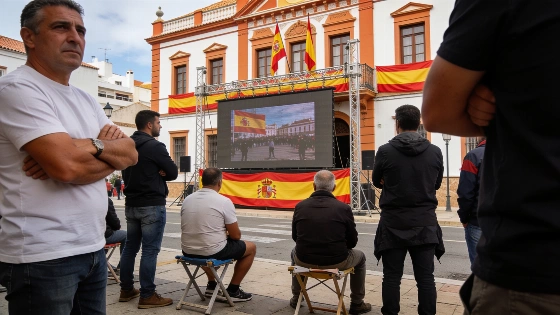
On the day crowds packed the plaza outside the Delegación del Gobierno in Ceuta, Miguel Ángel Pérez Triano saw the writing on the wall. Demonstrators set up giant screens, staged mock funerals, and blasted the Spanish anthem. The square where he lived and worked turned into a protest camp. For Pérez Triano, home became hostile ground.
Everything changed after the mass crossing at the Tarajal border. Thousands poured into Ceuta. His phone rang nonstop. He sent urgent updates to Madrid, pushed for military help, and tried to calm friends. But the city’s patience snapped. Pérez Triano, a Socialist in a Partido Popular stronghold, became the main target for public anger. RTVE and Público reported that he handed in his resignation on September 28, 2026. He blamed a "campaign of harassment" and the toll on his family. He also quit all political and party roles at once.
David de la Encina was appointed as Pérez Triano's successor, with the formal transfer of powers prepared by the Council of Ministers.
Pérez Triano’s political story started long before this crisis. Born in Ceuta in 1983, he trained as a primary and PE teacher at the University of Granada. He later earned a Pedagogy degree from UNED. After years in Madrid preparing for teaching exams, he joined the teaching corps in 2014. He came back to Ceuta in 2019 to teach at Colegio Público Vicente Alexaindre. He saw migration up close. He taught Spanish at the Centro de Estancia Temporal de Inmigrantes (CETI) and led the local Extranjería office. In 2025, he became secretary general of the PSOE in Ceuta.
The local Socialist party was already split. The migration crisis made things worse. Melchor León, the party’s vice-secretary in the Assembly, blamed Pérez Triano in public. His reputation took a hit. Even friends questioned his silence. They felt torn between loyalty and duty. A social worker close to him summed it up: “Hubiera querido que el ‘Migue’ amigo dimitiera antes. El ‘Migue’ institucional no podía hacerlo.” The job came at a personal cost.
Inside the party, pressure never let up. Reports said Pérez Triano could not walk the streets without facing hostility. The government plaza became a protest zone. Symbolic gestures and loud displays targeted him. The siege felt constant. La Vanguardia reported that the crisis deepened public protests and split the local PSOE. Criticism grew. Party confidence faded fast.
Pérez Triano stated that he had warned the central government in Madrid about the risks of a mass crossing at the Tarajal border several weeks before the incident, submitting reports to both the Ministry of the Interior and the Ministry of Territorial Policy in July 2026.
In his resignation, Pérez Triano described a “very hostile environment.” He spoke about the toll on his family, including his wife, a justice official. He denounced “unjust pressure, insults and a smear campaign full of lies.” At his last appearance—no questions allowed—he insisted he had warned Madrid about the crisis. He said he sent reports to Interior and the Ministry of Territorial Policy in July, calling for urgent reforms and reinforcements. Party sources confirmed these warnings went up the chain. The avalanche still hit.
His relationship with Madrid’s top officials was tense. Pérez Triano thanked Ángel Víctor Torres, the minister in charge of the Delegación, for his support. But things with Interior Minister Fernando Grande-Marlaska soured. Pérez Triano stopped appearing with Marlaska at press conferences. The split was clear.
Rumors spread about a move to the Canary Islands. That did not happen. Pérez Triano has now left all his posts, quit the PSOE, and plans to return to teaching. People close to him say he waited to resign until a replacement could be found for the sensitive job. The next delegate will face a city still shaken by crisis and a party in pieces.
Pérez Triano’s fall shows how fast public mood can turn in Ceuta. His story lays bare the risks for officials caught between national policy and local anger. Ceuta now faces a bigger task. It must restore order and rebuild trust—both in its institutions and among its divided people.