The government is defending its Catalonia strategy before the 29-N election. Félix Bolaños says pardons and amnesty have restored political coexistence, while Carles Puigdemont could now return without arrest.
The Constitutional Court has ordered the Supreme Court to apply the amnesty law in a case linked to former Catalan minister Dolors Bassa. The ruling changed Carles Puigdemont's immediate legal position before the 29-N general election.
Félix Bolaños said in an interview with Ser that Puigdemont could return to Catalonia today without being arrested. The decision to return, he said, belongs to Puigdemont.
There is no timetable. Pablo Llarena lifted the national detention order against the former Generalitat president as an interim measure pending a new judicial decision. The case remains open.
Puigdemont has spent almost nine years outside Spain. The change in his legal position now allows him to enter the country without an active national detention order in the independence-process case, although the proceedings have not yet been definitively closed.
The order was not a final ruling. It did not close the proceedings or grant Puigdemont an individual amnesty.
RTVE reported that the Constitutional Court told the Supreme Court to examine the amnesty question as a priority and with urgency. The case concerns Bassa and an embezzlement charge linked to the independence process.
The government is presenting the ruling as part of a wider political record. Bolaños says the pardons granted during the previous legislature and the amnesty approved in 2024 were aimed at Catalan society, not only at named politicians.
That is the election message.
He argues that the political cost paid by Pedro Sánchez and the PSOE should be measured against what he calls a new period of coexistence in Catalonia. According to Bolaños, people on opposing sides can now speak, negotiate and reach agreements.
He did not claim that the measures were broadly accepted. They faced strong opposition when they were adopted.
The Constitutional Court ruling concerned former Catalan minister Dolors Bassa and the application of the amnesty to an embezzlement charge linked to the independence process. Its effect is to require the Supreme Court to reconsider the matter urgently; it does not itself constitute an individual amnesty for Puigdemont.
The legal route has remained disputed. The government negotiated the amnesty with Junts, ERC and the other parliamentary groups that supported its investiture. It needed the absolute majority required for approval.
The law dealt with the independence movement that erupted in 2017 under Mariano Rajoy. It was passed in 2024.
Puigdemont's position changed after the court ruling. An earlier court report explained how the decision could affect his return and guide the judges handling the case.
Llarena also lifted the national detention orders against former Catalan ministers Antoni Comín and Lluís Puig. He left those measures subject to a new judicial decision.
For now, the immediate risk is gone.
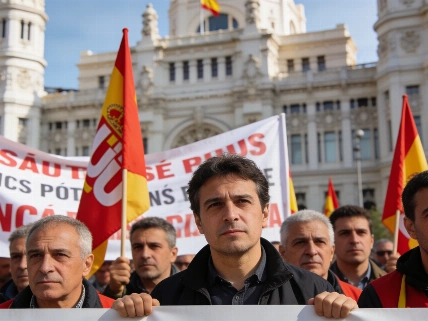
The PP and Vox have attacked the amnesty at street demonstrations. They say it was unconstitutional, breached European law and damaged the separation of powers. Bolaños rejects those claims and says events have disproved them.
His argument is direct. The opposition's main criticism has become part of the government's case for the policy.
Catalonia also carries electoral weight. The socialists hold a wide seat advantage there over the PP. That makes the government's defence more than a review of past decisions.
It is an appeal to a region that could affect the next parliamentary result. The government wants voters to judge the amnesty by its claimed effect on coexistence, rather than by the conflict that surrounded its approval.
On the government's account, the amnesty and pardons have produced the result Sánchez and Bolaños promised. They removed institutional barriers and opened a possible route for Puigdemont to return without arrest.
The opposition rejects that reading. The legal position has still moved in the government's direction.
Madrid is now presenting the Catalan conflict as politically normalised. It is making that case to voters in a region with major electoral weight.
Puigdemont's lawyer, Gonzalo Boye, has said his client does not plan to return until the Supreme Court definitively applies the amnesty and concludes the proceedings. Junts has taken the same cautious position.
The absence of an active national detention order does not settle every legal question. Puigdemont can enter Spain without that order, but the Supreme Court will decide whether his case is fully closed.