Josep Borrell criticizes the European Commission’s approach to Israel and warns that Spain’s independent foreign policy is leading to marginalization within the EU. The government’s positions on Gaza and migration have drawn sharp reactions.
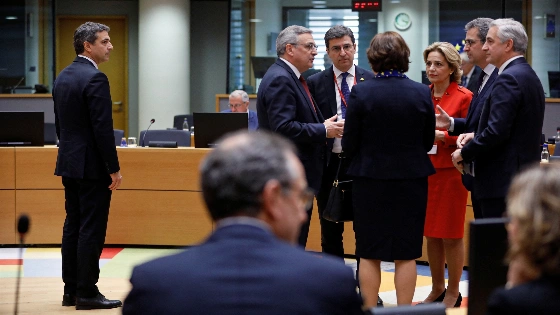
Spain’s foreign policy is facing growing friction within the European Union, as former EU foreign affairs chief Josep Borrell openly criticized the European Commission and its president, Ursula Von der Leyen, for their handling of the Israel-Gaza conflict. Speaking at the closing session of Quo Vadis Europa at the Universidad Internacional Menéndez y Pelayo, Borrell argued that Spain’s increasingly independent positions—especially on Israel, the United States, and migration—are coming at a cost: political isolation in Brussels.
Borrell, who has long been at odds with Von der Leyen over the EU’s response to Gaza, climate policy, and relations with the US, described Spain as a counter-model within the bloc. He pointed out that Spain’s alignment with the Global South and its willingness to challenge the EU consensus have led to a loss of influence. “Spain has won support from the Global South by taking different positions from most of Europe, but that comes with a price. It marginalizes Spain within the Union,” Borrell stated.
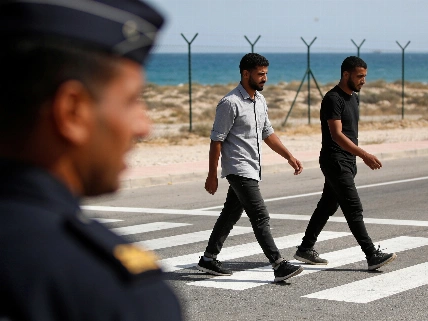
The Spanish government’s recent foreign policy moves have underscored this divide. Madrid has adopted a more vocal stance against Israel’s actions in Gaza, with Prime Minister Pedro Sánchez labeling the attacks as “genocide.” On migration, Spain’s regularization policies and openness have contributed to economic growth but also triggered criticism from 22 EU countries, led by Italy and Denmark, especially after the Ceuta border crisis. Borrell noted that migration remains a divisive issue, eroding European unity and fueling public anxiety, even as data shows irregular migration is declining.
Beyond the Middle East and migration, Borrell highlighted three major pressures facing Europe: the weakening security relationship with the United States, commercial competition from China, and military threats from Russia and instability in the Middle East. He also criticized the rollback of green and technological advances in the EU, blaming recent policy shifts supported by right-wing and far-right parties in the European Parliament. According to Borrell, migration is now the “final straw” causing internal fractures within European political families.
Spain’s approach stands in contrast to what Borrell described as the EU’s retreat from its founding values. He accused Von der Leyen of abandoning the idea that Europe should guarantee the old international order. Instead, Spain has positioned itself as a defender of traditional European principles, particularly in its criticism of Israel’s actions in Gaza and its more open migration policies. However, Borrell warned that this path inevitably leads to tension and reduced influence within the EU framework.
The debate over Spain’s foreign policy comes amid broader questions about the EU’s ability to maintain unity on security, migration, and international relations. The Ceuta border incident, which previously exposed divisions among Spanish and EU officials, remains a reference point for ongoing disputes. For example, a recent review of intelligence failures during the Ceuta crisis highlighted the complexity of managing migration and border security within the EU.
Contextually, Spain’s foreign policy has evolved significantly since the era of Felipe González, with the current government seeking to establish a distinct international identity. The country’s economic growth, partly driven by migration, contrasts with the more restrictive approaches favored by other EU members. As the EU faces mounting external and internal pressures, Spain’s willingness to challenge consensus may shape its role in Europe for years to come. The ongoing debate underscores the delicate balance between national interests and collective EU action, especially as the bloc navigates a rapidly changing global landscape.