A government rift has exposed questions about the CNI’s response to the Ceuta border surge. The director’s actions are under review. Ministers disagree on what was known before the incident.
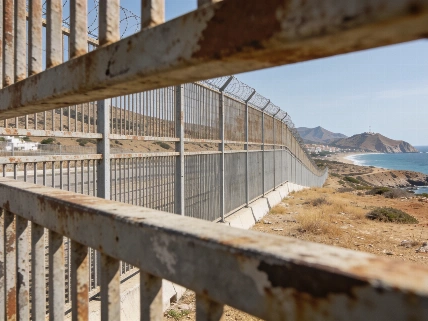
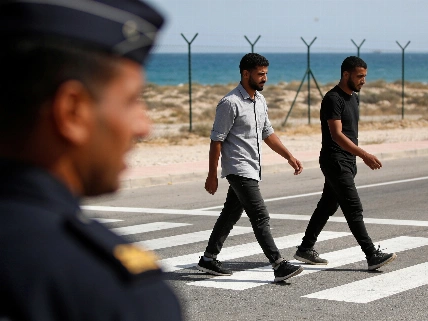
The Spanish government is facing renewed tension after a mass attempt to cross the Ceuta border brought the role of the Centro Nacional de Inteligencia (CNI) and its director, Esperanza Casteleiro, into sharp focus. The incident, involving nearly 80,000 people on July 30, has triggered a public dispute between the Minister of Defence and the Minister of the Interior over whether the intelligence services provided adequate warning.
On Thursday, Félix Bolaños, Minister of the Presidency and Justice, reiterated that the government had no prior or precise information about the scale of the migrant surge. This statement, coming from a close ally of the Prime Minister, directly contradicts Defence Minister Margarita Robles, who maintains that the CNI verbally alerted the government’s delegate in Ceuta the day before the incident. However, Miguel Ángel Pérez Triano, the delegate in question, has publicly denied receiving such a warning.
The disagreement has spilled into the open, with three ministers—Grande Marlaska, Ángel Víctor Torres, and Bolaños—publicly distancing themselves from Robles. Off the record, other officials have criticized Robles for her independent approach, while past private messages between Pedro Sánchez and José Luis Ábalos have resurfaced, revealing internal tensions within the cabinet.
Despite mounting pressure, Robles remains in her post and continues to defend the CNI and its director. Esperanza Casteleiro, a veteran of the intelligence community since 1983 and a trusted figure within the Defence Ministry, is now at the center of the controversy. Her long career includes roles as Secretary of State for Defence and Chief of Staff to Robles, making her one of the minister’s closest allies.
According to the law governing the CNI, the agency is responsible for providing the Prime Minister and the government with information to prevent threats to Spain’s territorial integrity. After the Ceuta incident, Sánchez described the event as an attack on Spain’s territorial integrity, directly invoking the CNI’s core mandate. Yet, there is no evidence that Casteleiro delivered any report or verbal briefing to the Prime Minister about the risk at the border, raising questions about compliance with legal obligations.
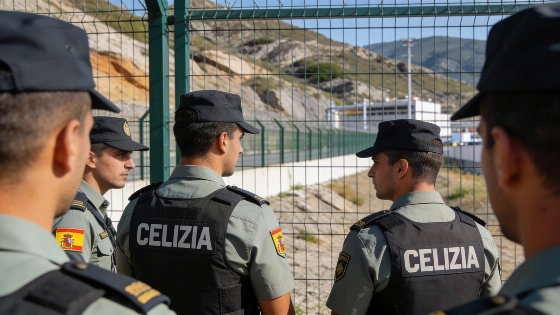
The law also requires the CNI to collaborate with the Guardia Civil and National Police on intelligence matters. However, there are no indications that the CNI shared critical information about the impending mass crossing with these security forces. While it is possible that some warning was given to the government’s delegate in Ceuta, the lack of escalation to the highest levels of government is now under scrutiny.
Some observers point to a shift in Spain’s approach to Morocco since April 2022, when Sánchez signaled support for Moroccan sovereignty over Western Sahara. This policy, aimed at avoiding conflict with Morocco, may have influenced how intelligence was communicated and prioritized. The Foreign Minister’s request for the King to thank Mohamed VI for his crisis management further illustrates the government’s cautious stance toward its neighbor.
Responsibility for the Ceuta crisis is now being debated at the highest levels. While the Interior Minister has his share of accountability, the focus remains on whether Casteleiro fulfilled her duty to inform the Prime Minister. As noted in a related analysis, the government has previously tried to bridge internal divisions over the intelligence response, but the latest developments suggest the issue is far from resolved.
For context, the CNI is Spain’s principal intelligence agency, tasked with safeguarding national security and providing strategic information to the government. Its director is legally required to ensure coordination with other security bodies and to alert top officials to any threat to the country’s sovereignty. The Ceuta incident has reignited debate over the effectiveness of these mechanisms and the political consequences of intelligence failures at a time of heightened migration pressures on Spain’s borders.