Spain’s government is working to unify conflicting accounts from key ministers on the intelligence response to the Ceuta migrant surge. The move aims to prevent further division within the cabinet as scrutiny intensifies.
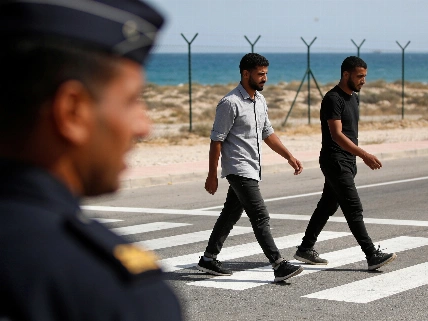
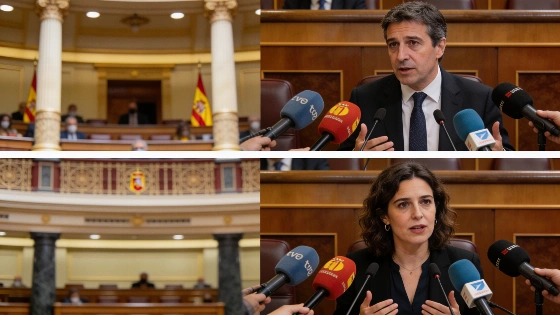
The Spanish government has ordered a coordinated response to reconcile the differing public statements made by Defence Minister Margarita Robles and Interior Minister Fernando Grande-Marlaska regarding the intelligence services’ role in the recent Ceuta migration crisis. The move comes after both ministers offered contrasting explanations about the CNI’s (Centro Nacional de Inteligencia) warnings ahead of the mass entry of migrants into the autonomous city.
While Robles told Congress that the CNI fulfilled its duties and shared relevant information with security forces before the influx, Marlaska, speaking almost simultaneously at Moncloa, insisted there was no report predicting the scale of the 2021 border incident, when 10,000 people crossed in a single day. This divergence has exposed internal tensions, with Robles suggesting intelligence did flag potential risks, and Marlaska attributing the lack of adequate police deployment to insufficient advance warning.
Despite these differences, the official line from Moncloa is that both accounts are “compatible.” Senior government figures, including First Vice President Carlos Cuerpo, have publicly downplayed any contradiction, emphasizing that all parties recognized a rise in arrivals but could not have foreseen the unprecedented scale. Cuerpo, after meeting with Granada mayors, reiterated that the gap between the intelligence alerts and the actual event was significant, but not contradictory.
However, unease persists within the cabinet, particularly over Robles’ refusal to follow the government’s narrative of blaming people-smuggling networks and praising Morocco as a reliable partner. Ángel Víctor Torres, now the sole coordinator of the crisis response, referenced Marlaska’s account in a radio interview, stressing that while there was an uptick in arrivals, no communication anticipated tens of thousands crossing at once. The PSOE leadership has instructed its members to present a united front, especially given the national security implications.
Amid ongoing uncertainty about how many migrants remain in Ceuta irregularly, Prime Minister Pedro Sánchez has announced he will address Congress on 3 September, 35 days after the mass entry. This preempts a parliamentary vote that could have compelled his appearance. Other ministers are also set to appear voluntarily in the coming days to explain their roles, aiming to avoid being summoned by opposition parties.
Internal criticism has surfaced within the PSOE, with some members privately describing the government as overwhelmed by the crisis. Castilla-La Mancha president Emiliano García-Page voiced concerns about the timing and management of the response, suggesting that the lack of a unified command early on contributed to confusion. He also highlighted the anxiety caused by the visible disagreement between Robles and Marlaska.
For additional context, the ongoing debate over the government’s handling of the Ceuta situation has previously led to public disputes between ministers, as detailed in this earlier report on cabinet tensions.
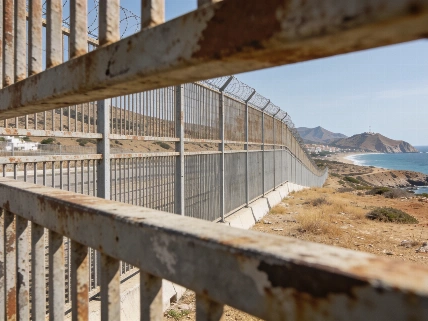
Ceuta, a Spanish enclave on the North African coast, has long been a focal point for migration from Morocco and sub-Saharan Africa. The 2021 incident marked one of the largest sudden influxes in recent years, straining local resources and prompting national debate over border security and Spain’s relationship with Morocco. The government’s efforts to present a unified stance reflect both the political sensitivity of migration issues and the broader challenge of managing Spain’s external borders. The situation remains fluid, with further parliamentary scrutiny and policy adjustments expected as the crisis evolves.