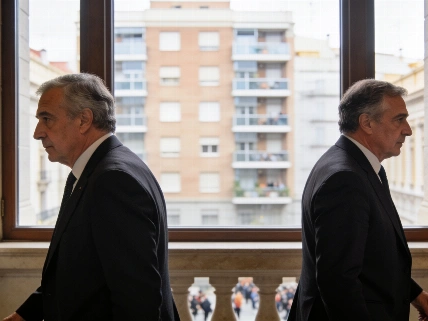
Interior Minister Marlaska and Defence Minister Robles face renewed conflict after the Ceuta migration surge. Disagreements over intelligence warnings and Morocco’s role deepen the rift. The government struggles to contain internal divisions.
The longstanding rivalry between Fernando Grande-Marlaska and Margarita Robles, both senior ministers in Pedro Sánchez’s government, has erupted again following the recent migration crisis in Ceuta. The arrival of 80,000 irregular migrants by swimming across the border in late July exposed deep divisions at the heart of Spain’s cabinet, with Marlaska and Robles openly contradicting each other over the handling of intelligence and relations with Morocco.
While both ministers share a background as judges, their paths to government diverged sharply. Marlaska’s appointment as Interior Minister in 2018 surprised many, given his previous ties to the PP and his reluctance to run for Madrid’s city council under the PSOE banner. Robles, on the other hand, was a close parliamentary ally of Sánchez and had previously served as Secretary of State for the Interior under Felipe González. She was widely tipped for the Interior portfolio but ultimately accepted Defence, on the condition that the ministry regained direct control over the Centro Nacional de Inteligencia (CNI).
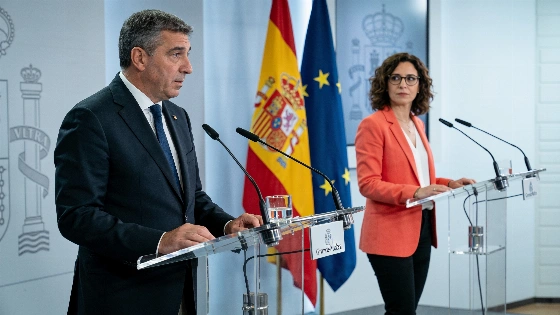
According to sources close to the Interior Ministry, the tension between Marlaska and Robles dates back to their first days in office. Their relationship, described as distant from the outset, has become increasingly public. The latest flashpoint came when Robles told Congress that the CNI had warned of suspicious activity on the Moroccan side of the border before the mass crossing. Marlaska, speaking at a press conference after the Council of Ministers, insisted there was no such intelligence report, directly contradicting his cabinet colleague. Efforts by the government and PSOE to downplay the dispute have met with limited success.
The friction is not new. When Marlaska took over Interior, he found that Robles had installed Félix Azón, a trusted associate, as director general of the Guardia Civil—a position requiring consensus between Defence and Interior. Marlaska later dismissed Azón without consulting Robles, prompting her to boycott the swearing-in of his successor, María Gámez, and later the appointment of Pablo Salas as deputy operational director. These gestures highlighted the persistent lack of coordination between the ministries.
Beyond personnel disputes, the two ministers have clashed over the scope of their respective departments during national emergencies. During the pandemic, Robles sought to expand military involvement in policing under Operation Balmis, but Marlaska refused. He was also frustrated by the uncoordinated deployment of the Unidad Militar de Emergencias (UME) during the Filomena snowstorm. The relationship soured further when Marlaska abruptly dismissed a Guardia Civil officer serving as liaison to the Defence Staff for receiving a COVID-19 vaccine out of turn—a move that also led to the resignation of General Miguel Ángel Villarroya, a close ally of Robles.
The balance shifted after the previous mass entry of migrants into Ceuta in May 2021, when the return of 55 unaccompanied minors to Morocco without proper legal procedures led to the disqualification of the government’s delegate in the city. Robles subtly questioned Marlaska’s crisis management in a subsequent interview, adding to the public perception of discord.
Complicating matters, both ministers later learned their mobile phones had been infected with Pegasus spyware, along with those of Sánchez and Agriculture Minister Luis Planas. The incident was investigated by the Audiencia Nacional, further straining trust within the cabinet.
The latest events in Ceuta have reignited the conflict. Robles broke with the official government line during a visit to the city, emphatically defending Spanish sovereignty over Ceuta and Melilla in response to Moroccan claims. Marlaska, by contrast, has consistently avoided statements that might antagonize Rabat, repeatedly praising the “extraordinary” cooperation with Morocco. The government has largely sided with Marlaska’s approach, leaving Robles increasingly isolated on the issue.
This internal rift mirrors broader tensions in Spanish policy toward Morocco and the management of migration flows. As highlighted in a related report on Morocco’s renewed claims over Ceuta and Melilla, the stakes for Spain’s border security and diplomatic relations remain high. The ongoing dispute between Marlaska and Robles underscores the challenges facing the Sánchez government as it seeks to balance internal unity with external pressures.
For context, Ceuta and Melilla are Spanish autonomous cities on the North African coast, frequently at the center of migration and diplomatic tensions with Morocco. The CNI, Spain’s national intelligence agency, plays a key role in monitoring border threats, while the Guardia Civil and military units are responsible for on-the-ground security. The current dispute highlights the complexity of coordinating Spain’s response to migration surges and the importance of clear communication between ministries. As the situation evolves, the government’s ability to present a united front will be closely watched both domestically and internationally.