King Mohamed VI led a religious event in Rabat where Morocco’s claim to Ceuta and Melilla was referenced. The move comes as migration pressures rise and legislative elections approach. Political silence and government divisions add to the tension.
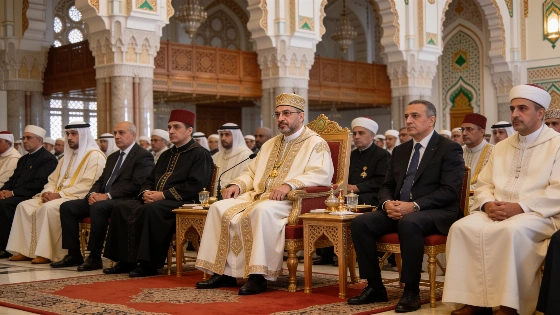
Morocco’s King Mohamed VI has reignited the country’s longstanding claim over the Spanish cities of Ceuta and Melilla during a high-profile religious ceremony in Rabat. The event, held at the royal palace mosque to mark Al Mawlid, was attended by the king, his son Mulay Hasán, and his brother Mulay Rachid. The ceremony’s official address, delivered by Minister of Islamic Affairs Ahmed Tufiq, referenced historic Islamic scholars from Ceuta and described the cities as “occupied,” echoing Morocco’s traditional stance on the enclaves.
The timing of these remarks is significant. They come as Morocco faces renewed migration pressures at the Ceuta border, with tens of thousands of irregular migrants crossing in late July. The government’s response has been muted. Prime Minister Aziz Ajanuch, who was present at the ceremony, has avoided public comment since the crisis began. His absence from the debate has drawn attention, especially after reports surfaced of his private trip to Mallorca shortly after the border incident. Meanwhile, the Justice Minister Abdelatif Uahbi has taken a more vocal role, demanding Spain return all unaccompanied Moroccan minors from Ceuta and linking the acceptance of deceased migrants’ bodies to the repatriation of these children.
Other government ministries, including Interior and Foreign Affairs, have issued statements but have largely avoided direct political confrontation. The Justice Minister’s position is notable as he campaigns for his party’s candidate, Fuzi Lekjaa, ahead of the September 23 legislative elections. Lekjaa, a technocrat and head of the Moroccan Football Federation, is seen as a potential future prime minister. The coalition’s third partner, the nationalist Istiqlal Party, has traditionally championed the “Moroccan identity” of Ceuta and Melilla but has kept a lower profile during the current crisis, limiting its public statements to supporting Uahbi’s remarks.
Past incidents show the sensitivity of the issue. Three years ago, Enaam Mayara, then president of Morocco’s upper house and a senior Istiqlal figure, faced backlash after suggesting Morocco could reclaim the cities by force. The comment drew criticism from official media and led to his departure from the chamber’s leadership. The episode highlighted the delicate balance Moroccan officials must maintain when addressing the Spanish enclaves, especially as diplomatic relations with Spain have fluctuated in recent years.
The renewed focus on Ceuta and Melilla comes as Spain also faces domestic scrutiny over its handling of migration and border security. Recent political debates in Madrid have linked migration flows to broader questions of government accountability and property deals, as seen in the controversy surrounding Isabel Díaz Ayuso’s administration and its response to the Ceuta crisis. For example, the issue was referenced in a recent report on political fallout in Madrid, underscoring how developments in North Africa continue to reverberate in Spanish politics.
Ceuta and Melilla have been under Spanish control for centuries, but Morocco’s claim remains a recurring point of tension. The cities are not only strategic border points but also symbols of national identity for both countries. As legislative elections approach in Morocco, the issue is likely to remain in the spotlight, with potential implications for bilateral relations and migration management in the region. The situation illustrates the complex interplay between domestic politics, historical claims, and the practical challenges of border control in the western Mediterranean.