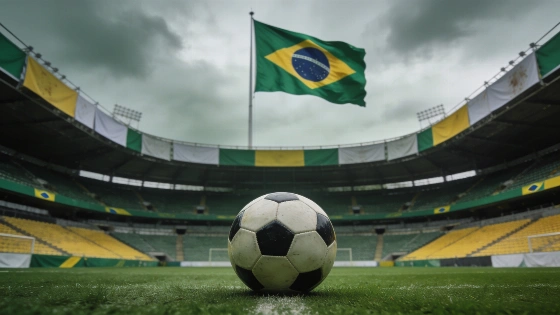
A bill in Brazil aims to restrict national team call-ups to players and coaches working in domestic clubs. The move follows Brazil's early World Cup exit and targets betting sponsorships in football.
A legislative proposal in Brazil could dramatically reshape the national football team by allowing only players and coaching staff registered with Brazilian clubs to be selected for international competitions. The bill, introduced by federal deputy Luiz Carlos Hauly (Podemos-RS), comes in response to Brazil's disappointing performance at the 2026 FIFA World Cup, where the team was eliminated by Norway with a 2-1 defeat. The measure would also apply to youth and women's national teams, aiming to reinforce the domestic football ecosystem after a historic setback.
Under the terms of PL 3.582/2026, eligibility for the national squad would be limited to those actively working in Brazil, with exceptions only for friendly matches and promotional games, subject to agreement with the event organizer. The bill stipulates that both players and all technical staff, including the head coach, must be professionally tied to Brazilian clubs. This marks a significant shift from the current practice, which often sees the majority of the squad drawn from top European leagues.
The recent World Cup campaign highlighted the issue: only 7 of the 26 players called up by coach Carlo Ancelotti, the first foreign manager in Brazil's history, were playing in Brazil at the time. The early exit was Brazil's worst World Cup result since 1990, intensifying calls for reforms to strengthen the national game. Hauly argues that prioritizing domestic talent and leadership is essential for rebuilding Brazil's football identity and competitiveness.
Beyond player selection, the bill also targets the growing influence of betting companies in Brazilian football. It proposes a ban on advertising by betting houses—commonly known as 'bets'—across all products, teams, and competitions organized within the country. This would affect sponsorship deals that have become widespread: at the start of the 2026 Brazilian Championship, 12 out of 20 Série A clubs had contracts with betting firms, and major tournaments like the Campeonato Brasileiro and Copa do Brasil currently feature betting companies in their naming rights.
Currently, the Brazilian Football Confederation (CBF) is not explicitly barred from partnerships with betting operators, provided these companies comply with Law No. 14.790/2023 and regulations from the Ministry of Finance's Secretariat of Prizes and Betting. Only licensed betting firms are permitted to advertise, including on team uniforms. The proposed legislation, however, does not address personal sponsorships between national team players and betting companies, though amendments could be introduced to cover this area as the bill progresses.
The proposal is now awaiting review by the Chamber of Deputies' Board of Directors and may be assigned to relevant committees before any plenary vote. If approved, it would then move to the Federal Senate and require presidential sanction to become law. The debate over the role of foreign-based players and betting sponsorships in Brazilian football echoes broader discussions about the commercialization and identity of national teams worldwide. In a related context, the intersection of sports and politics has also been highlighted in other countries, such as when digital media activists joined political campaigns in Madrid, reflecting the growing influence of off-field factors in shaping sporting institutions.
Brazil's move to restrict national team selection to domestic talent would represent a major departure from the global trend, where top players often build their careers abroad. The bill's progress will be closely watched by stakeholders in football and the betting industry, as its implications could extend beyond Brazil, potentially influencing how other nations approach the balance between local development and international experience in sport.