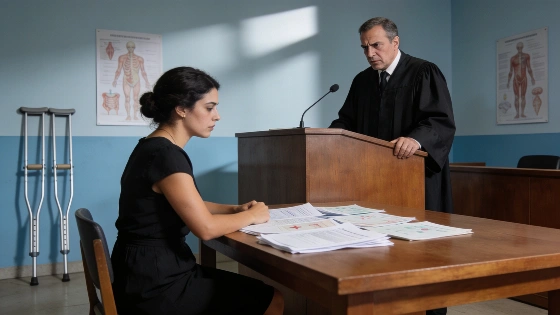
A domestic worker in Cantabria has lost her legal battle for a permanent disability pension after suffering a fractured fibula and severe ankle sprain. The court ruled that her medical limitations do not prevent her from continuing her job, despite ongoing pain and previous health issues.
The Superior Court of Justice of Cantabria has upheld a decision denying permanent disability status to a domestic worker who suffered a fractured left fibula and a serious sprain in her right ankle. The ruling follows a detailed review of her medical records, which the court found insufficient to justify a pension for permanent incapacity.
The case began after the worker was injured on June 30, 2023, leading to surgery on her left ankle and a period of rehabilitation. She also received treatment for her right ankle, including infiltrations and physiotherapy. Alongside these injuries, she cited a history of epilepsy and a previous operation for a herniated disc, arguing that persistent pain and difficulty walking made it impossible to continue her work.
Medical Assessment
In the months following her accident, the worker underwent multiple medical tests. Imaging confirmed ligament damage and a grade III sprain in her right ankle, as well as a partial tear of the peroneal tendon and advanced cartilage wear. Cervical and lumbar scans revealed mild degenerative changes, but the court noted these did not amount to significant impairment. Neurological studies of her right leg showed normal results, a factor the court considered crucial in determining her ability to work.
Social Security Review
The Social Security Disability Assessment Team reviewed her case in March 2025 and concluded that her injuries did not meet the threshold for permanent incapacity. The National Institute of Social Security (INSS) denied her pension request the same day. After a failed administrative appeal in June 2025, the worker took her case to the Social Court, which also rejected her claim. She then appealed to the Superior Court of Justice of Cantabria, arguing that her limitations had not been properly evaluated and that her condition warranted at least a total, if not absolute, disability pension.
Court's Final Decision
The Superior Court dismissed her appeal, stating that the medical evidence did not demonstrate functional limitations severe enough to justify permanent disability. The judges highlighted that, despite her pain and medical history, orthopedic specialists found no joint injuries that would fully explain her reported symptoms. The normal neurological findings further supported the conclusion that she could continue working in her usual role.
As a result, the court confirmed the original decision by the INSS, denying both absolute and total permanent disability status. The ruling means the worker is not entitled to a disability pension and is considered fit to return to her job as a domestic worker.
Cases like this illustrate the strict criteria applied by Spanish courts and social security authorities when assessing claims for permanent incapacity. Medical documentation must clearly demonstrate a level of impairment that makes it impossible to perform one's usual occupation, and even significant pain or previous health issues may not be enough if objective tests do not confirm disabling limitations.