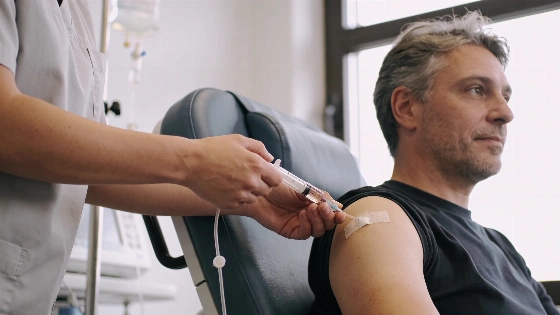
CAR-T therapy is changing care for blood cancers, especially after relapse. But access still depends on specialist hospitals, manufacturing capacity and the money and distance involved.
For patients whose lymphoma returns after chemotherapy, the next treatment may come from their own immune system. CAR-T therapy removes white blood cells from the body and genetically equips them to recognise and destroy tumour cells. It offers a new option when conventional treatments have failed. The process requires specialist hospitals and takes several weeks to complete.
The promise of the treatment became clear in 2010. Bill Ludwig's leukaemia had not responded to treatment when he entered a clinical trial in the United States. Doctors later found no trace of the disease. Ludwig was the first patient to receive CAR-T. He even asked hospital nurses to confirm that the result was real.
By 30 June 2026, the FDA had approved seven CAR-T therapies for blood cancers, according to the AACR Cancer Progress Report. In the previous 12 months, lisocabtagene maraleucel (Breyanzi) also gained an expanded indication for relapsed or refractory marginal zone lymphoma after at least two lines of therapy.
That episode is no longer science fiction. Carlos Chaib, the medical director of Bristol Myers Squibb, describes CAR-T as the clearest example of personalised therapy. The method is now used for blood cancers such as leukaemia, myeloma and lymphoma. Regulators are also widening its use for selected relapsed and refractory diseases.
In April 2026, the FDA gave TECARTUS full approval for relapsed or refractory mantle cell lymphoma, according to industry reports. In February 2026, it removed an earlier YESCARTA label restriction for relapsed or refractory primary CNS lymphoma.
Lymphoma is expected to produce around 13,000 new diagnoses in Spain in 2026, according to Alejandro Martín, a haematologist at Complejo Asistencial Universitario de Salamanca. That equals 26 cases per 100,000 inhabitants. More than 60 types exist. Diffuse large B-cell lymphoma and follicular lymphoma are among the most common.
The two diseases call for different decisions. Diffuse large B-cell lymphoma is aggressive and can grow quickly, so diagnosis and treatment must move fast. Follicular lymphoma is indolent. It may develop slowly enough that immediate treatment is not always needed. Enlarged lymph nodes in the neck, groin or armpits are the most common sign, especially when they persist or keep growing.
Access remains a practical bottleneck even after a patient is accepted for treatment. Materials presented at SOHO 2026 cited a 22% to 31% share of enrolled patients who did not ultimately reach CAR-T infusion, reflecting the combined effects of selection, logistics and manufacturing constraints.
CAR-T is generally considered after the first lines of treatment fail or the lymphoma returns. Chemotherapy combined with other medicines controls diffuse large B-cell lymphoma in roughly 60% to 70% of cases. The remaining 30% to 40% may need another treatment strategy. Doctors may also need a new biopsy after relapse because the tumour may have mutated.
The process is tailored to each patient from the first step. Doctors collect the patient's lymphocytes during a session lasting between three and four hours. The cells then undergo manufacturing for approximately three to five weeks. They are returned to the patient in a single infusion. Preparatory chemotherapy comes first. The modified cells are designed to identify a specific marker on the tumour and attack it.
The infusion is only one part of a demanding process. Most patients need to stay in hospital because the treatment requires suitable facilities and staff trained to manage the infusion and possible complications. Gloria Iacoboni of Hospital Universitario Vall d'Hebron says the field is working towards shorter admissions and, eventually, more treatment outside hospital.
Cost adds another barrier. The state may pay hundreds of thousands of euros for a commercial CAR-T treatment. Products developed within the public health system can cost up to three times less. Ministry of Health figures show more than 2,700 applications between 2019 and 2025. Last year, 40 centres could administer the therapy.
Those centres are not equally easy for every patient to reach. Some people must travel and stay in another territory for treatment, which creates extra financial pressure. Marcos Martínez of Asociación Española de Afectados por Linfoma, Mieloma y Leucemia has argued that patients do not start from equal circumstances even when treatment is approved. The contrast with the personal health stories covered in an earlier report is clear. Here, the practical burden is distance from specialist care and the cost of staying there.
Across Europe, CAR-T is available in countries including England, France, Germany, Spain and Italy. The route to treatment still depends on national reimbursement rules and the type of specialist centre. In Italy, combined immunochemotherapy for diffuse large B-cell lymphoma is available with reimbursement for patients whose disease returns or remains resistant after first-line treatment. In the United States, one CAR-T treatment for B-cell acute lymphoblastic leukaemia is available in more than 70 centres, showing how much access depends on the specialist network.
Research is moving in several directions. Scientists are looking for new receptors that could send CAR-T cells towards different tumour targets. They are studying allogeneic versions made from donor cells and ready for use, which could sharply reduce manufacturing time. Other projects aim to modify lymphocytes inside the body or create cells that recognise two or more targets at once.
On 16 September 2026, the company reported that the FDA had cleared an IND for IASO208, a CD20-targeted in vivo CAR-T candidate for adults with relapsed or refractory B-cell non-Hodgkin lymphoma. The programme is intended to deliver genetic instructions inside the body instead of manufacturing each patient's cells outside it. It remains an investigational approach.
CAR-T has moved from experimental promise to established treatment for selected blood cancers. It is still not a simple solution. Its value depends on how many patients respond, how quickly hospitals can provide it and how safely they can monitor it. Geography and cost can still block access. The next test is whether health systems can make this personalised treatment available on equal terms.