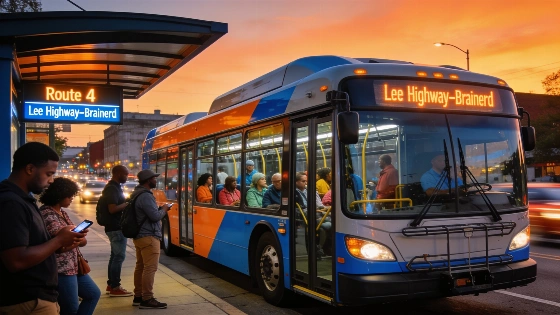
Chattanooga’s basic public transit operator, CARTA, has begun gathering community input on the future of Route 4, one of the city’s busiest bus lines, connecting Lee Highway, Brainerd and downtown. This week, the agency held a town hall meeting and invited residents to weigh in on how the corridor should evolve as part of the long-term Connect the Corridor study.
To encourage participation, CARTA offered free rides on Route 4 for several hours and ran shuttle service between Barger Academy and the community center. The agency is seeking ideas to improve mobility and safety, while expanding access to jobs and services along the corridor, a critical link for daily commuters and local businesses.
Proposals under review include a new community hub along Route 4, which could make it easier for residents to reach employment centers and impressive services, as well as other destinations, as Chattanooga’s population grows. CARTA CEO Charles Frazier has also outlined plans for an express route that would cut travel times by stopping only at basic points along the corridor, potentially halving journey times for regular users. In an interview with ETA Transit, Frazier called Route 4, which runs from downtown to Brainerd, “the spine of our service.” That role means corridor changes could affect the wider network, including how riders connect to the basic bus line.
Frazier has said CARTA’s microtransit service is designed to provide first-mile and last-mile connections to Route 4, not replace its fixed-route service. He has also identified capacity as a challenge, distinguishing trips that bring riders to the bus corridor from point-to-point trips within the microtransit zone. CARTA’s discussion of mobility hubs, kiosks and phone-based trip information is part of a broader effort to coordinate fixed-route buses with demand-responsive service.
Feedback at the meeting underscored the need for reliable and accessible transit for local residents. Hamilton County’s Lindy Locke called for better bus stop accessibility, while frequent rider Bruce Blohm pointed to Route 4’s place in daily life and urged faster, more efficient service to ease traffic congestion and strengthen community connections.
Along with the express route and community hub, CARTA is weighing infrastructure upgrades, including new sidewalks and safer pedestrian crossings, enhanced shelters and improved lighting, plus mobility hubs and transit stations. The agency says public input from the Connect the Corridor initiative will directly inform its 20-year vision for the area.
Route 4 is a backbone for east-west travel in Chattanooga, linking residential neighborhoods to downtown and major employment zones. Local transit data show steady ridership growth along the corridor in recent years, reflecting broader trends in urban mobility across the United States. As cities nationwide invest in public transport to address congestion and support economic development, Chattanooga’s approach to Route 4 could offer a model for similar projects elsewhere.