Firefighters in Castilla y León report ongoing shortages of helicopters and trained staff. Early wildfires and high temperatures raise concerns about the region's preparedness. Promised investments from authorities remain largely unseen.
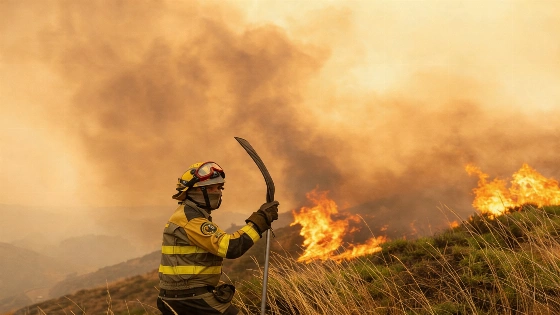
Castilla y León is entering another wildfire season under pressure, as firefighting teams warn that critical shortages of helicopters and experienced personnel persist despite official promises. Early incidents in León have already exposed operational gaps, with crews forced to tackle dangerous fires without aerial support and with incomplete teams on the ground.
According to reports gathered by EL PAÍS, the region's fire brigades have seen little improvement in resources, even after last year's devastating fires that destroyed 140,000 hectares and resulted in five fatalities. While the regional government, now led by a coalition of PP and Vox, has announced new investments and created a dedicated Directorate General for Wildfire Prevention and Extinction, frontline staff say these measures have yet to translate into real change. Many bases, such as El Oterico in León, remain only partially operational, lacking basic infrastructure and equipment.
Firefighters describe a situation where helicopters are either missing, delayed, or reassigned between bases, leaving some areas without aerial coverage during critical periods. In Zamora, Ávila, Burgos, Soria, and Palencia, crews have reported days without their assigned helicopters, even as the region faces an official declaration of extreme fire risk due to a heatwave. Vehicles have also been left idle because of a lack of drivers, and some teams operate without proper coordination or leadership.
The integration of private firefighting staff into the Tragsa agreement, announced by President Alfonso Fernández Mañueco, has sparked further complications. A major employers' association instructed its 950 workers to halt their duties in protest, a move criticized by frontline brigadistas who remain committed to responding to fires. Many see the transition as positive in principle but poorly executed and rushed, leading to confusion and operational delays.
Staffing remains a persistent issue. Many new hires arrive in June with little or no prior training, and the high turnover means that experienced personnel are in short supply. According to the Asociación de Trabajadores de Incendios Forestales de Castilla y León, only about a quarter of the workforce is employed year-round, with the rest on temporary contracts. This instability is especially evident in locations like Cueto (León), where two companies operate under different agreements and basic facilities such as showers and changing rooms are still lacking.
Veteran members of the Brigada de Refuerzo de Incendios Forestales (BRIF), part of the national Ministry for Ecological Transition, have also voiced concern about the lack of experience among regional teams. They report that many new recruits are unfamiliar with procedures and equipment, increasing the risks during high-intensity fires. The BRIF units have been called out almost daily since the start of the season, often stepping in to support under-resourced local teams.
These operational challenges in Castilla y León echo broader issues seen in other recent emergencies, such as the large-scale evacuation following a fire in a Madrid office tower, where resource coordination was also tested. For example, more than 2,000 people were affected during the Moeve Tower incident, as detailed in this report on the Madrid fire response.
Wildfire risk in Spain is closely linked to climate conditions, with rising temperatures and prolonged droughts increasing the frequency and severity of incidents. Castilla y León, with its vast forested areas and history of major fires, remains particularly vulnerable. The effectiveness of the region's response this summer will depend on whether promised resources and reforms can be delivered in time to meet the escalating threat.