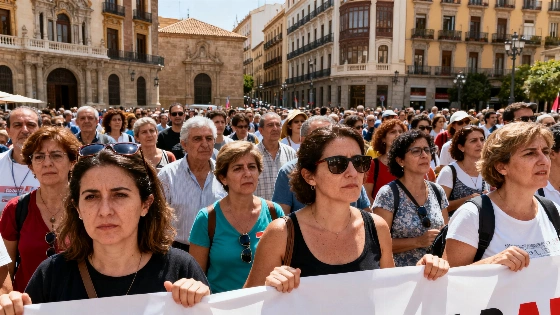
Catalonia’s main education unions have called a strike for September 8, the first day of the new school year. The move pressures the regional government to negotiate on public education reforms. Officials insist classes will begin as planned.
Teachers in Catalonia have announced a strike for September 8, the scheduled first day of the 2026–2027 school year, intensifying pressure on the regional government to address unresolved issues in public education. The decision, reached at the seventh Assembly of the Asamblea Educativa de Cataluña (AEC) in Sant Celoni, signals a direct challenge to the Department of Education’s assurances that the academic year will begin without disruption.
The assembly brought together representatives from key unions—USTEC, CGT, Intersindical CNT, and COS—all of which retain the authority to call industrial action. According to AEC spokesperson Mònica Rodrigo, the strike is intended to force urgent negotiations with the Catalan government, as educators argue that previous proposals have failed to address persistent shortcomings in the public system. Rodrigo emphasized that the unions do not wish to wait until September to begin talks, urging the Department of Education to convene a negotiation table within July.
Union leaders argue that the government’s recent measures have not improved daily conditions in classrooms or resolved systemic problems. They point to a lack of meaningful change for all segments of the education sector, from early childhood (0–3 years) to vocational training. The unions that called the strike are notably those that did not sign the last agreement with the Department of Education, highlighting ongoing divisions within the sector.
Approximately 80 participants attended the assembly in person, including territorial assembly delegates, teachers, educational support staff, and representatives from the leisure education sector. Organizers say the turnout and breadth of representation give legitimacy to the decision to escalate industrial action. Despite the meeting taking place in July, union leaders expressed satisfaction with the level of engagement and the ability to reflect concerns from across Catalonia.
The strike announcement comes amid a broader context of labor unrest in Spain’s education sector. In recent years, disputes over working conditions, funding, and exam procedures have led to high-profile conflicts. For example, a recent controversy in the Basque Country saw thousands of university staff back exam correctors in a legal dispute with students, as reported in coverage of the EHU exam dispute. Such cases underline the growing willingness of education professionals to mobilize when they feel their concerns are not being addressed.
In Catalonia, the upcoming strike is set to affect all public schools and could disrupt the start of classes for thousands of students. The unions’ demand for urgent negotiations reflects a broader frustration with the pace of reform and the perceived lack of meaningful dialogue with authorities. The Department of Education has yet to respond publicly to the latest ultimatum, but the risk of a delayed or disrupted school start now looms large for families and staff across the region.
Spain’s education system is decentralized, with regional governments responsible for most policy decisions. In Catalonia, education has long been a politically sensitive issue, intersecting with debates over language, autonomy, and public investment. Strikes and protests by teachers have periodically shaped the school calendar and forced policy changes. The outcome of the current standoff may set a precedent for how similar disputes are handled in the future, both in Catalonia and elsewhere in Spain.