Catalonia faces its most severe weather alert in years as authorities ban movement from 18:00 due to torrential rains. With forecasts of over 200 liters per square meter, the region braces for flooding, marine tornadoes, and widespread disruption.
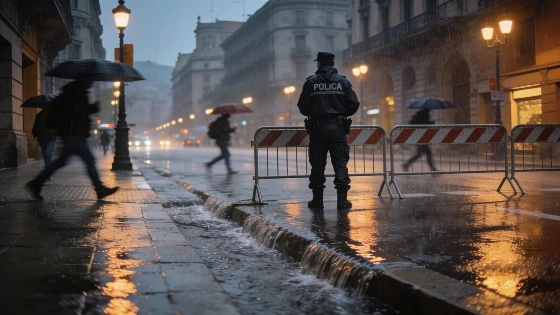
Sirens sounded across Catalonia on Saturday. By 18:00, roads emptied as a rare maximum-level weather alert forced a region-wide travel ban. The storm was coming fast. Forecasters warned that more than 200 liters of rain per square meter could fall. Flooding, marine tornadoes, and violent winds threatened Tarragona, Barcelona, and Girona.
Emergency alerts hit mobile phones before sunset. Civil Protection called it an “exceptional episode.” Residents were told to stay put and follow strict safety rules. The ban on movement and all activities will last until 14:00 Sunday. It covers the coastal and pre-coastal zones of the three main provinces, plus Osona and Moianès. Key roads and entry points shut down early. Officials moved quickly as the storm front closed in.
According to Meteocat, the maximum red alert was issued not only for coastal areas but also for inland regions such as Osona and Moianès, reflecting the unusually wide scope of the threat.
President Salvador Illa called it straight. He described the storm as a “mini huracán” and warned, “No es una broma.” His message was clear: take this seriously. Meteocat meteorologists said marine waterspouts, tornadoes, and damaging winds were possible. The central Catalan coast faced the worst. Up to 40 millimeters of rain could fall in just 30 minutes. Some areas might see 90 millimeters in three hours. In 24 hours, totals could hit 200 millimeters.
The danger did not stop at Catalonia’s borders. Eleven autonomous communities across Spain faced weather warnings. Asturias, Cantabria, and Madrid were on orange alert. The Basque Country, Andalusia, Baleares, Castilla y León, Extremadura, Galicia, and Castilla-La Mancha were on yellow. In Madrigueras, Castilla-La Mancha, a flash flood dumped over 140 liters per square meter. The regional government asked for disaster zone status after a woman died and 90 people needed rescue. Prime Minister Pedro Sánchez spoke of “grave damage” from the relentless rain across Spain.
Hydrological agencies warned about surges in ravines and small rivers, especially in the Ebro basin. The risk would last into early Sunday. Valencia and Tarragona also prepared for heavy storms and high rainfall. Urgency spread across eastern Spain.
According to official reports, the current episode is part of a prolonged cycle of severe weather in Catalonia, with Meteocat having raised alerts several times since September 30, indicating a worsening trend of heavy rainfall and associated risks.
Catalonia has faced dangerous rain before. As reported earlier by Civil Protection, ES-Alerts for heavy rain in Tarragona have gone out in the past. But this time is different. The scale is bigger. The travel restrictions are unprecedented.
Infrastructure and emergency crews are under strain. The next hours will show how well Catalonia’s cities and people can cope. The blanket mobility ban is a first for Spain’s response to extreme weather. It shows how unpredictable the climate has become. When lives and property are at risk, officials are not taking chances.