Catalonia's government has tasked 15 experts to assess this year's controversial PAU Math exam after average scores plummeted. The review will compare the test with previous years and other regions, following a surge in student complaints.
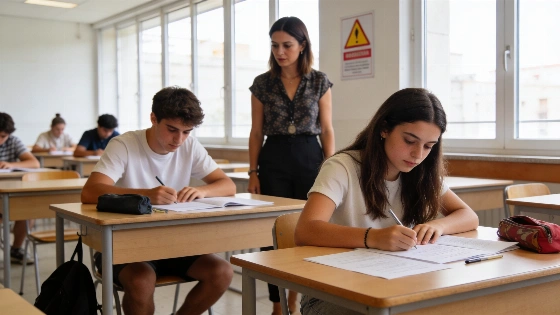
Catalonia's Department of Universities has launched an urgent review of this year's scientific Mathematics exam in the university entrance tests (PAU), after average scores fell to their lowest point in a decade. The move comes in response to widespread criticism from students and a sharp increase in formal complaints, with the exam's length and difficulty at the center of the controversy.
The regional government has commissioned 15 independent experts to analyze the 2026 Mathematics exam, comparing it with previous years, the alternative 'incidence' test, and similar exams from other Spanish regions. According to the Department, the review was initiated at the end of June but only made public this week. The exam's average score dropped to 4.18, a dramatic fall from last year's 6.12, and more than 21,000 formal complaints were filed—over 2,000 of which specifically targeted the Mathematics test.
Students reported that the exam was not only more complex but also too lengthy to complete within the allotted time. The Department acknowledged these concerns, with the regional minister for Research and Universities, Núria Montserrat, admitting in parliament that the test's calculation load and duration were problematic, though she maintained the content matched the curriculum. Chemistry, however, saw the largest increase in complaints, nearly doubling from the previous year.
Each of the 15 experts was asked to submit a detailed report. Raúl Fernández, a university professor and president of the Federación de Entidades de Profesores de Matemáticas de Cataluña (FEEMCAT), noted that while the Catalan exam required more deductive reasoning compared to the more calculation-focused test in Galicia, this approach demanded additional time from students. Fernández also highlighted the need for a more collaborative exam-setting process, suggesting that relying on a single author for such high-stakes tests is risky.
The Department has not specified when the expert reports will be fully analyzed or what changes might result. Any adjustments are unlikely to affect this year's results but could influence the format or process for future exams. Meanwhile, a survey among PAU examiners across 35 subjects rated the Mathematics test's alignment with the curriculum at 8.19 out of 10, despite the controversy. Meetings with subject coordinators are ongoing to discuss possible improvements.
This episode reflects broader tensions in Spain over regional education standards and exam fairness. Similar disputes have arisen in other regions, such as the recent funding disagreement between Catalonia and Madrid over public transport cards, which also highlighted the complexities of regional policy differences. For more on regional policy clashes, see this report on Catalonia's rejection of Madrid's transport card funding proposal.
Spain's PAU exams, known as Selectividad, are a critical gateway to university admission and are set independently by each autonomous community. This decentralized approach often leads to significant variation in exam content and difficulty, fueling debates about equity and student mobility. The current review in Catalonia may prompt further scrutiny of how regional differences impact educational outcomes and access to higher education across the country.