Catalonia’s Education Department has dismissed its secretary general and launched disciplinary proceedings against three officials. The move follows a major error in the administration of PISA tests, raising questions about oversight.
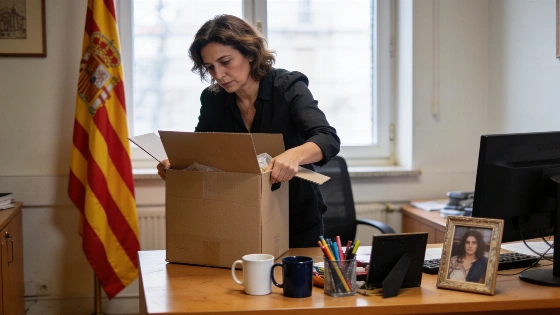
The Catalan Education Department has dismissed its secretary general, Teresa Sambola, and initiated disciplinary proceedings against three unnamed officials after a significant error compromised the region’s PISA test results. The decision, announced by Education Minister Esther Niubó, comes just days before the official publication of the PISA data, which has now been invalidated for Catalonia due to procedural failures.
Niubó stated that certain individuals had not fulfilled their assigned responsibilities, leading to the disciplinary measures. While she emphasized that Sambola’s removal was not directly linked to the PISA controversy, she acknowledged the need to strengthen the department and address operational weaknesses exposed by the incident. The minister refrained from disclosing the identities of the three officials facing disciplinary action.
The issue centers on the selection of students for the PISA assessment. Of the nearly 2,500 fifteen-year-olds scheduled to participate in Catalonia during the April–May 2025 testing period, 23.2% were exempted for reasons such as recent arrival in Spain, insufficient language proficiency, or learning disorders. This far exceeds the 5% exemption threshold recommended by the Organisation for Economic Co-operation and Development (OECD), which oversees the PISA program. As a result, only 1,909 students took part, undermining the statistical validity of the results and prompting the OECD to question the representativeness of the Catalan sample.
The controversy first emerged in late July, after schools had closed for summer and most staff were on holiday. However, the Education Department had been aware of the problem since March, and the issue surfaced publicly nearly three weeks after officials met with OECD representatives to discuss the evaluation process. Despite the time elapsed, the department initially claimed it was unclear at which stage the error occurred and launched an internal review.
This incident has drawn attention to the broader challenges of educational oversight and data integrity in Spain. Similar concerns about transparency and procedural rigor have surfaced in other regions, as highlighted when the Valencian Antifraude Agency concluded its investigation into recruitment practices in the Diputación de Valencia, raising questions about urgency and process in a related case.
PISA, the Programme for International Student Assessment, is a triennial international survey that evaluates education systems worldwide by testing the skills and knowledge of 15-year-old students. The OECD’s strict guidelines are designed to ensure comparability and reliability across countries and regions. In Spain, PISA results are closely watched by policymakers, educators, and the public, as they influence debates on educational quality and reform. The invalidation of Catalonia’s results is likely to fuel further scrutiny of regional education management and may prompt calls for tighter controls on test administration in the future.